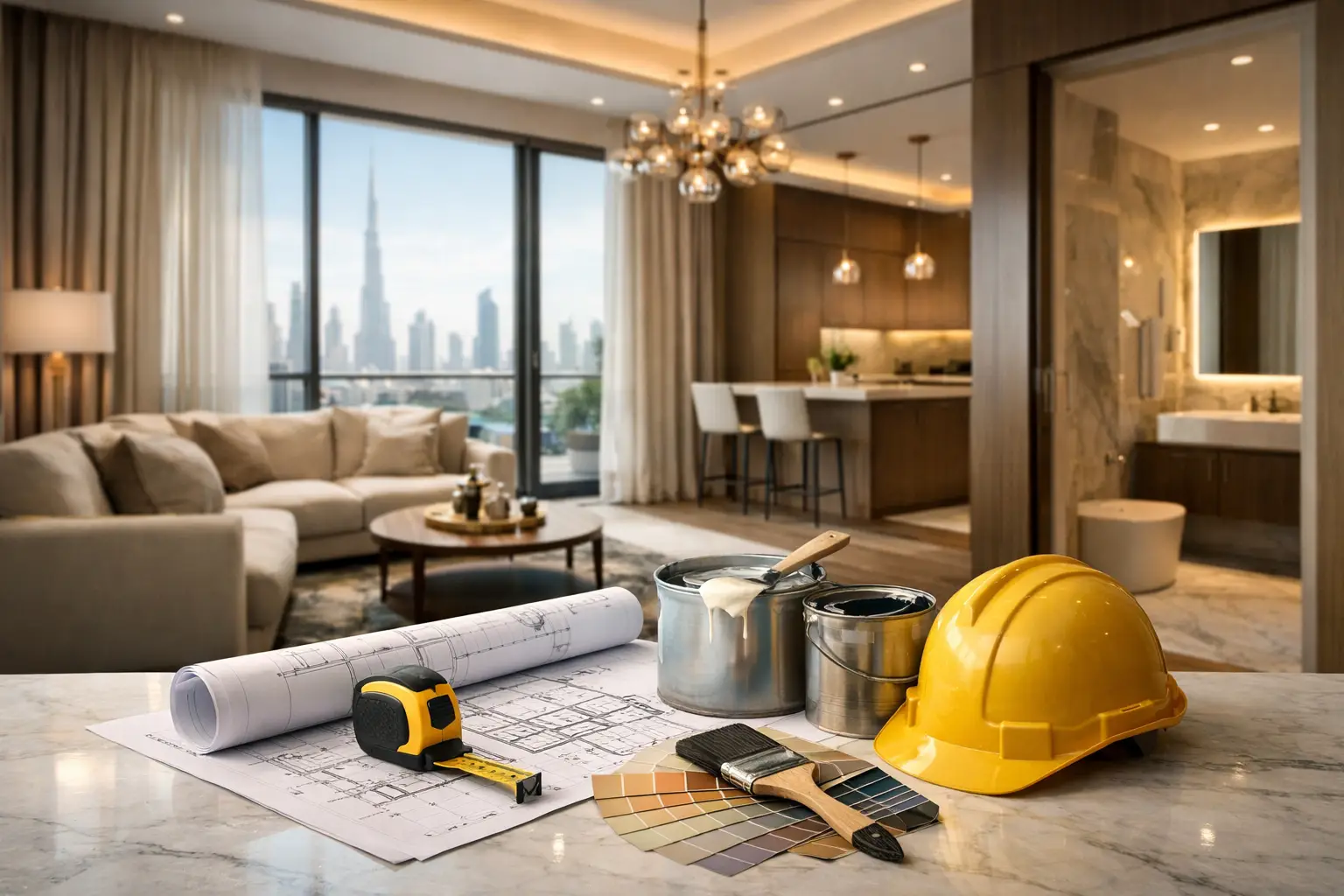
A good apartment renovation in Dubai is rarely defined by one dramatic change. More often, it comes down to how well every detail works together - layout, joinery, finishes, lighting, storage, and site execution. That is why apartment interior renovation Dubai projects need more than design ideas. They need disciplined coordination, technical understanding, and a contractor who can carry the project from demolition to final finishing without gaps between trades.
In premium apartment communities, expectations are high and margins for error are small. Building regulations, service access, acoustic concerns, neighbor sensitivity, and finishing standards all affect how a renovation should be planned. For owners upgrading a primary residence, preparing an apartment for resale, or improving a high-value rental property, the real question is not only how the space will look. It is whether the work will be executed cleanly, correctly, and to a standard that holds up over time.
What apartment interior renovation Dubai really involves
Apartment renovation is often underestimated because the footprint is smaller than a villa. In practice, apartments can be more demanding. Access is tighter, working hours may be restricted, approvals can take time, and every service line matters. A renovation may include civil modifications, flooring replacement, bathroom upgrades, kitchen improvements, custom wardrobes, wall paneling, wallpaper, false ceilings, lighting adjustments, curtains, and made-to-measure furniture.
The complexity increases when owners want a complete visual upgrade rather than isolated repairs. Once you change flooring, for example, skirting details, door clearances, threshold levels, and built-in joinery may also need adjustment. If a kitchen is being renovated, electrical load, appliance integration, plumbing points, countertop fabrication, and storage planning all need to align. Good execution is what turns these separate scopes into one finished interior.
This is where a one-roof approach becomes valuable. When joinery, upholstery, curtains, custom furniture, and site works are handled through one coordinated team, decisions are faster and accountability is clearer. That does not eliminate every project variable, but it reduces the common delays caused by multiple disconnected vendors.
Where apartment renovations succeed or fail
Most renovation problems are decided early. Not at handover, and not when furniture arrives. They start at scope definition, technical planning, and material selection.
A common mistake is approving a design direction without enough attention to execution. A beautiful bedroom wall treatment may look straightforward on paper, but on site it depends on substrate condition, electrical coordination, panel alignment, edge details, and finishing quality. The same applies to bathrooms. Tile selection is only part of the result. Waterproofing, slope correction, niche placement, glass partition sizing, and sanitary fitting installation determine whether the finished space feels premium or merely new.
Another issue is fragmented responsibility. If one company handles civil work, another supplies wardrobes, another installs curtains, and another produces sofas, small mismatches become almost inevitable. Dimensions shift. Completion dates slide. Final styling and fit suffer because no one party is accountable for the full outcome.
For apartment owners in developments with strict building management requirements, planning matters even more. Material movement, debris disposal, access permits, and timing windows all affect progress. A contractor with real experience in occupied towers and managed communities will plan differently from one that mainly works in unrestricted sites.
How to plan an apartment renovation without creating avoidable delays
The strongest projects begin with a realistic scope. Some owners start with one room and then expand the brief midway. That can work, but only if the contractor has enough in-house capability to absorb changes without losing control of the program. In many cases, it is better to decide at the beginning whether the target is a cosmetic refresh, a functional upgrade, or a full turnkey renovation.
A cosmetic refresh may involve paint, wallpaper, curtains, flooring updates, and selected furniture pieces. A functional upgrade usually extends to kitchens, wardrobes, bathrooms, lighting, and storage optimization. A full renovation is broader, combining demolition, fit-out, joinery, finishes, furniture, and final styling elements in one coordinated package.
Material choice should also be made with actual use in mind. A family apartment has different demands from a short-term rental unit or an investor-owned resale property. The right finish is not always the most expensive one. It is the one that suits the level of use, maintenance expectations, and long-term performance required. Matte surfaces may look elegant but can show marks more easily in certain settings. Natural materials add depth and value, but they may require more care. Custom joinery offers better fit and visual consistency, especially in apartments where every inch of storage matters.
Key zones that deserve the most attention
The living area usually sets the tone for the entire apartment. In Dubai apartments, this space often needs to serve multiple purposes - daily living, entertaining, dining, and sometimes a home office function. Renovation here is less about filling the room and more about balance. Wall treatments, TV units, custom sofas, curtains, rugs, and lighting need to relate to each other in scale and finish.
Kitchens are another high-impact area. In many apartments, the layout cannot be altered dramatically without structural or building limitations, so improvement comes from better planning and smarter detailing. Cabinet configuration, integrated appliances, countertop material, backsplash selection, and lighting all make a visible difference. A kitchen renovation should not only improve appearance. It should make storage and workflow more efficient.
Bathrooms carry strong visual and practical value. Well-executed bathroom upgrades can elevate the feel of the whole apartment, especially in older units where original finishes date the property. Tile layout, vanity design, mirror detailing, shower enclosures, and concealed storage all contribute to the result. Poor waterproofing or rushed tiling will undermine the project quickly, no matter how attractive the fittings look.
Bedrooms and wardrobes deserve equal discipline. Premium apartment interiors often rely on clean, integrated storage rather than oversized decorative gestures. Custom wardrobes, upholstered beds, wall panels, blackout curtains, and well-planned lighting create a quieter, more finished environment. In compact rooms, precision matters. A few centimeters in wardrobe depth or bed placement can change circulation completely.
Why in-house execution changes the result
For apartment owners, convenience is only one reason to prefer an execution partner with in-house production. The larger benefit is control. When custom furniture, joinery, upholstery, curtains, and finishing details are produced and coordinated under one company, the design intent is easier to maintain across the project.
That matters in subtle ways. A wardrobe finish can be matched properly to wall paneling. Curtain measurements can be taken in coordination with ceiling details and track placement. A sofa can be sized to suit the room rather than forced into it. Site-built elements and loose furniture can be developed as part of one interior language instead of looking separately sourced.
This model also helps with sequencing. Renovation projects often slow down not because the work is difficult, but because one trade is waiting on another. Better coordination reduces those pauses. It also gives the client a clearer point of communication, which is especially valuable for owners who live abroad, manage multiple properties, or simply do not want to supervise several vendors.
A company like Time Furniture, with long-standing UAE renovation and in-house production capability, is built around that kind of coordination. For clients investing in a premium apartment finish, that structure is not a small operational detail. It is a practical advantage.
Choosing the right renovation partner for a Dubai apartment
Experience should be judged by relevant work, not broad claims. Apartment renovation requires a contractor who understands tower access, approval processes, fit-out sequencing, joinery accuracy, and finishing quality. Ask how the project will be managed, who handles measurements, what is produced in-house, and how site work and custom fabrication are coordinated.
It is also worth paying attention to how a contractor discusses trade-offs. Not every apartment needs the same level of intervention. In some homes, replacing flooring throughout is worthwhile. In others, keeping certain base elements and upgrading the visual layers is the smarter route. A reliable contractor will not oversimplify these decisions. They will explain where investment improves value and where it may not materially change the outcome.
The best apartment renovations feel calm when finished. Not because the work was simple, but because the planning was strong and the execution was controlled. If you are considering apartment interior renovation Dubai work, choose a partner that can manage the full picture - structure, joinery, finishes, furnishings, and final detail. The difference shows in the result, and just as much in the experience of getting there.