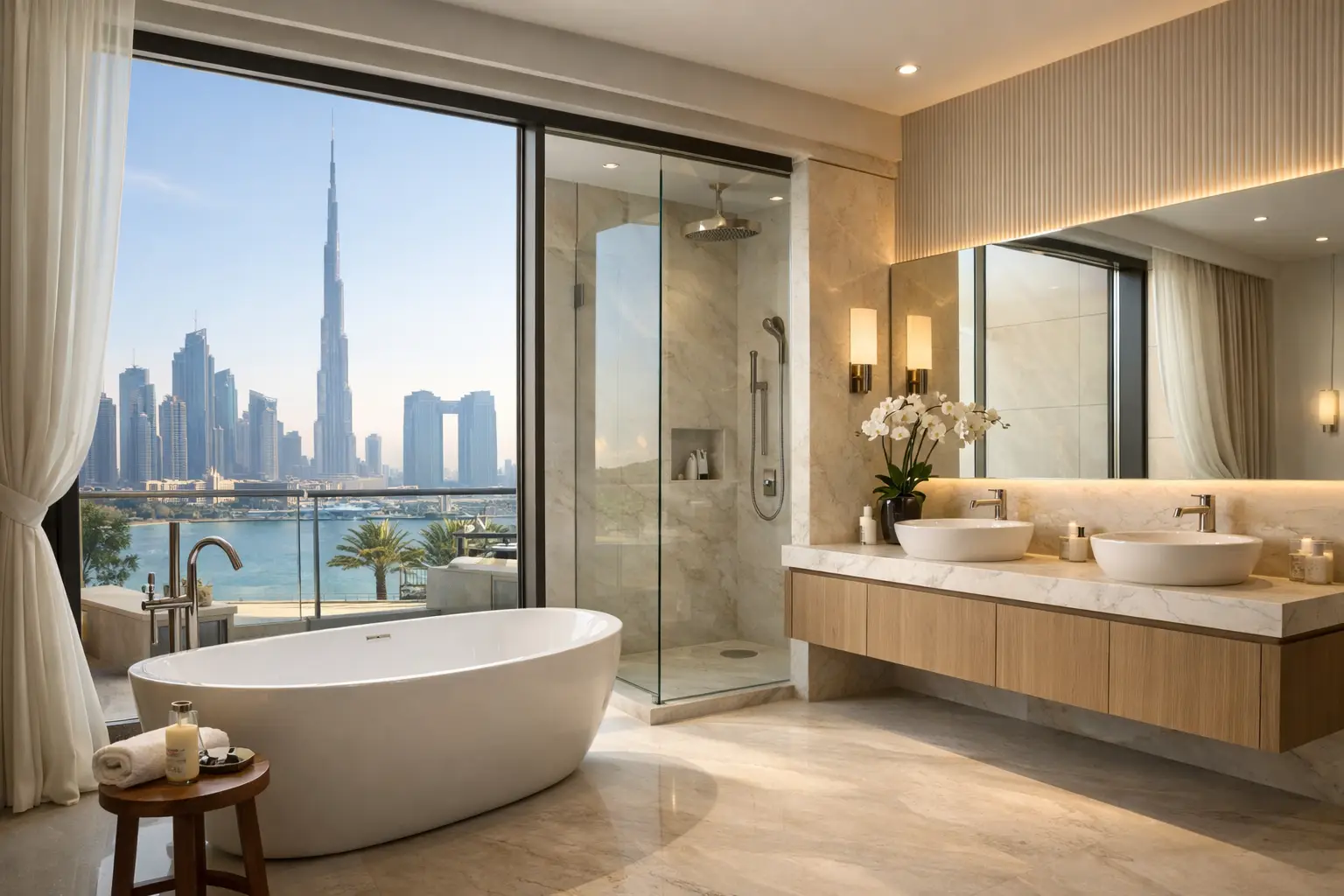
A bathroom usually looks simple until the work begins. Then the real scope shows up - waterproofing behind tile, drainage levels under the floor, concealed plumbing inside walls, lighting positions above mirrors, and joinery that must survive heat and humidity. That is why bathroom renovation Dubai projects are rarely just about changing finishes. They are technical upgrades that need careful coordination if the result is meant to look refined and perform well over time.
For villa and apartment owners in Dubai, the standard is high for good reason. In premium homes, bathrooms are not treated as secondary spaces. They affect comfort, daily routine, resale value, and the overall quality of the interior. A poorly executed bathroom is noticed immediately. So is a well-finished one.
What makes bathroom renovation Dubai projects different
Dubai properties present a specific set of conditions. Many homes are in high-rise towers or master-planned communities with building regulations, access restrictions, approved work hours, and material movement protocols. That changes how renovation should be planned from day one.
Then there is the climate. Bathrooms deal with constant moisture, temperature variation, and intensive daily use. Materials that look good in a showroom may not perform equally well once installed in a humid, enclosed environment. The best renovation decisions balance appearance with technical suitability.
There is also the issue of coordination. A bathroom upgrade often involves civil work, plumbing, electrical modification, tiling, glass, ceilings, painting, stone, vanity fabrication, mirrors, accessories, and sometimes custom joinery or partitions. When several trades are handled separately, small gaps in responsibility tend to become expensive problems. This is where an experienced execution company adds real value.
Start with the right scope, not just a mood board
Many renovation problems begin before site work starts. A homeowner may have a clear design preference but an incomplete technical brief. The bathroom may need more than a surface refresh. Existing pipe conditions, slab levels, drainage falls, and wall alignment all affect what is realistically achievable.
For example, a floating vanity with integrated lighting may look clean and contemporary, but it also requires proper wall preparation, electrical planning, and exact dimension control. A walk-in shower with a flush floor line can feel far more premium than a raised shower tray, but only if drainage and waterproofing are resolved properly. The design idea is only one part of the job. Execution details decide whether it will perform as intended.
That is why serious bathroom renovation planning should include a site review, measured layout, utility assessment, finish selection, and a clear understanding of what will be replaced, retained, or reconfigured. In some homes, keeping the existing layout makes sense and reduces disruption. In others, repositioning sanitaryware creates a much better result. It depends on the structure, the building limitations, and the standard the client expects.
Layout decisions that improve the space
A good bathroom layout is not only about fitting everything in. It is about movement, proportion, and visual order. Even a compact apartment bathroom can feel more premium when the vanity width is correct, the mirror height is balanced, and the shower enclosure does not cut the room awkwardly.
Storage is another area where planning matters. Premium bathrooms benefit from concealed organization rather than visible clutter. Custom vanity units, recessed niches, mirrored cabinets, and well-considered joinery can make a major difference without overcomplicating the room.
In larger villas, the opportunity is usually different. The question is less about fitting essentials and more about creating hierarchy. Double vanities, feature walls, integrated lighting, freestanding tubs, and dry-wet zoning can elevate the entire suite, but only when the proportions are controlled. Bigger does not automatically mean better. The room still needs discipline.
Materials matter more in bathrooms
Bathrooms are unforgiving spaces. If material quality is weak, the failure tends to show early through swelling cabinets, stained grout, chipped edges, poor silicone lines, or fittings that loosen too soon. In premium homes, this is not acceptable.
Tiles and stone should be chosen for both appearance and maintenance. Large-format tiles can make a bathroom feel calmer and more architectural, but they require accurate substrate preparation and experienced installation. Natural stone can look exceptional, though it also needs the right sealing and ongoing care. Porcelain often gives a strong balance of design flexibility and durability, especially in high-use bathrooms.
Vanity finishes need the same level of thought. Not every board, laminate, veneer, or painted surface is appropriate near water exposure. Glass, mirrors, metal details, and sanitary fittings should also be selected as part of one coordinated scheme. If each item is sourced in isolation, the room can quickly feel inconsistent.
Waterproofing and technical execution are not optional details
The most expensive mistakes in bathroom renovation are often hidden behind the finish. Weak substrate preparation, incorrect waterproofing sequence, poor slope formation, and rushed plumbing adjustments may not be visible on handover day, but they create long-term risk.
A properly executed bathroom requires more than aesthetic supervision. It needs disciplined site work. Waterproofing should be applied correctly at floors, corners, wall joints, and wet areas, then protected through the rest of the installation process. Drainage must be tested. Plumbing points must align with final fixtures, not rough assumptions. Tile setting should follow level references, cut planning, and finish tolerances that suit a premium standard.
This is also why project coordination matters so much. When one party handles demolition, another handles plumbing, a third handles tiling, and someone else supplies the vanity, accountability becomes fragmented. Delays and blame tend to follow. A single execution partner with in-house capability across renovation trades, joinery, upholstery, custom fabrication, curtains, and finishing works can control more of the process and protect the final outcome.
Bathroom renovation Dubai for villas and apartments
Not every bathroom renovation follows the same path. In apartments, building management procedures, noise restrictions, service riser limitations, and access scheduling can shape the entire program. That means material deliveries, demolition timing, and waste removal need planning, not improvisation.
In villas, the opportunity for customization is usually greater. Clients may renovate multiple bathrooms at once, align the finish palette with a broader villa upgrade, or integrate the bathroom scope with wardrobes, flooring, bedroom joinery, and lighting improvements. In those cases, bathroom renovation becomes part of a larger interior execution strategy rather than an isolated task.
That broader approach often produces a better result. When one contractor understands the overall design language of the home, the bathroom connects more naturally with adjacent spaces. Door finishes, wall details, custom mirrors, wardrobes, and stone selections can be aligned rather than treated as separate decisions.
What experienced clients usually prioritize
Most property owners looking for premium bathroom renovation are not only buying new finishes. They are buying clarity, workmanship, and control. They want to know who is responsible for the job, how site coordination will be handled, whether the detailing will be resolved properly, and whether the project team can deliver without unnecessary friction.
This is especially true in higher-value communities where expectations around finishing are strong. Clients in areas such as Palm Jumeirah, Dubai Hills Estate, Downtown Dubai, Jumeirah, Arabian Ranches, and similar developments usually expect a cleaner process and a more complete service model. They do not want to coordinate five separate suppliers to complete one bathroom.
An established contractor with in-house production and fit-out capability is often better positioned for that kind of work. Custom vanities, wall paneling, mirror details, storage units, and related interior elements can be developed alongside site works instead of being treated as disconnected packages. That improves both timing and consistency.
Choosing the right execution partner
A bathroom can look polished in drawings and still fail on site if execution is weak. So the right partner should be evaluated on more than design language. Technical understanding, supervision, material knowledge, manufacturing capability, and finishing discipline all matter.
It also helps when the contractor can deliver beyond the wet area itself. Many renovations extend into bedrooms, dressing areas, wardrobes, flooring, or full apartment and villa upgrades. A company like Time Furniture, with long-standing UAE experience and in-house capability across joinery, upholstery, custom interiors, and fit-out execution, can support that broader scope in a more accountable way.
The best bathroom renovations feel calm, precise, and effortless once completed. Getting there is rarely effortless. It takes planning, coordination, and craftsmanship at every stage. If the bathroom is being renovated, it is worth treating it as a technical interior project, not just a decorative update. That is usually the difference between a bathroom that only looks new and one that genuinely improves how the home feels every day.