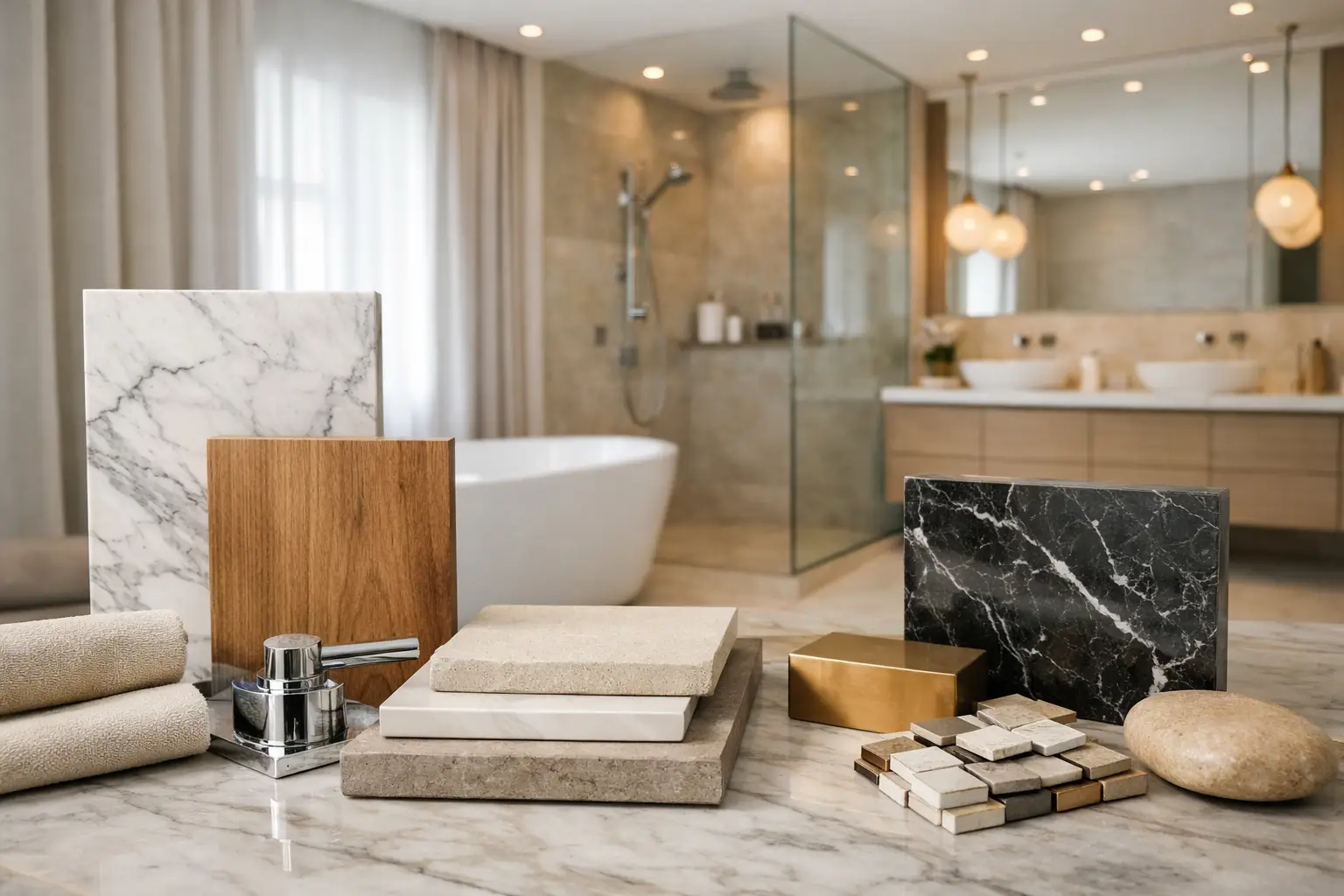
A bathroom can look refined on handover day and still fail within a few years if the materials behind the finish were selected poorly. In a high-use villa or apartment bathroom, the best materials for bathroom renovation must do more than complement the design. They must manage moisture, heat, cleaning chemicals, hard water, daily traffic, and the movement that naturally occurs within a building.
For premium homes in Dubai and Sharjah, material selection should be considered alongside site preparation, waterproofing, drainage falls, joinery detailing, and installation quality. A beautiful slab, tile, or vanity is only as reliable as the system supporting it.
Start With the Material You Will Not See: Waterproofing
Waterproofing is the most consequential material decision in any bathroom renovation, even though it sits behind tile and wall finishes. A failed membrane can allow water to migrate into adjacent rooms, damage ceilings below, swell joinery, and create expensive rectification work.
A quality cementitious or liquid-applied waterproofing system is generally suitable for shower zones, floors, wall junctions, niches, and pipe penetrations. The correct choice depends on the substrate, shower design, and manufacturer-approved installation system. What matters most is continuity: corners, floor-to-wall transitions, drains, and service penetrations require careful reinforcement and sealing.
In a walk-in shower, waterproofing should extend beyond the immediate wet area. This provides a greater margin of protection when water splashes or drainage is temporarily overwhelmed. A proper flood test before tile installation is a practical safeguard, not an optional extra.
Best Materials for Bathroom Renovation Surfaces
Porcelain Tile for Floors and Wet Walls
Porcelain is one of the most dependable choices for bathroom floors, shower walls, and feature walls. It is dense, low-absorption, highly resistant to staining, and available in finishes that replicate natural stone, concrete, timber, or more decorative surfaces without the maintenance demands of many natural materials.
For bathroom floors, prioritize a slip-resistant finish rather than selecting solely by appearance. Large-format porcelain can create a clean, expansive look in a master bathroom, but it requires a skilled installation team to maintain accurate levels and drainage falls. In shower areas, smaller tiles or carefully selected textured porcelain may be more practical because additional grout joints can improve grip and accommodate the slope toward the drain.
Matte porcelain usually performs better than polished tile on wet floors. Polished finishes can still work well on walls, where they add light and visual depth without creating a slipping hazard underfoot.
Natural Stone for Character, With Proper Specification
Marble, limestone, travertine, and granite bring distinctive character that porcelain cannot fully reproduce. Every slab has natural variation, making stone particularly effective for vanity tops, feature walls, and well-designed master bathrooms.
However, stone is not a universal answer. Marble and limestone can etch when exposed to acidic cleaners, while some stones require regular sealing and more considered maintenance. They are better suited to owners who value the natural patina that develops over time and are prepared to use appropriate cleaning products.
For shower floors and consistently wet areas, stone selection needs particular care. A honed finish is typically more suitable than polished stone, and the material's porosity, sealing requirements, and slip resistance should be reviewed before final approval. An experienced renovation contractor will also coordinate the slab layout, edge profiles, cutouts, and junctions so the finished result looks intentional rather than pieced together.
Quartz and Sintered Stone for Vanity Countertops
Vanity countertops must handle water, cosmetics, soap, and regular cleaning without losing their finish. Engineered quartz is a strong option for many bathrooms because it has a consistent appearance, low porosity, and good stain resistance. It works especially well when the vanity design calls for crisp miters, integrated upstands, or a coordinated wall finish.
Sintered stone is another premium option, valued for its resistance to heat, stains, scratches, and UV exposure. It can be specified in thin, large-format panels for contemporary vanity tops and wall cladding. As with any large slab material, fabrication and installation quality are central to the final result. Poorly aligned joints or unsupported sections can undermine an otherwise excellent selection.
Natural stone remains a compelling countertop choice where a more individual, architectural look is desired. The decision should be based on maintenance expectations, not appearance alone.
Cabinetry That Can Tolerate Bathroom Humidity
Bathroom vanities are frequently affected by moisture because they sit close to wet floors, plumbing connections, and shower zones. Standard board materials can swell when water enters exposed edges or poorly sealed cutouts. This is why the internal construction and edge treatment matter as much as the external finish.
Moisture-resistant MDF with a high-quality lacquered finish is suitable for many custom vanity designs, particularly when the unit is properly raised from the floor and detailed away from direct water exposure. Marine plywood offers greater moisture tolerance and is a strong choice for cabinet carcasses, especially in demanding locations. Both materials require professional fabrication, sealed edges, and careful coordination around basins and plumbing.
For external finishes, lacquer, veneer, laminate, and porcelain-clad panels each offer different benefits. Lacquer gives a tailored, smooth appearance but may show impact marks more readily. Veneer adds warmth and depth, although it should be protected from standing water. Premium laminate can be highly practical, stable, and available in convincing timber and stone effects.
A wall-hung vanity is often a sensible design choice. It creates a lighter visual effect, makes floor cleaning easier, and keeps the cabinet away from minor water accumulation. The wall structure and concealed fixing system must be designed to carry the load safely.
Grout, Silicone, and Metal Details Matter More Than Expected
Bathrooms often show their age first at joints and edges. High-quality grout, flexible sealant, and corrosion-resistant accessories protect the finish and make the room easier to maintain.
Epoxy grout is an excellent choice for shower floors, niches, and heavily used wet areas because it resists staining and absorbs very little water. It is more demanding to install than standard cement grout, so workmanship is essential. For lower-stress wall applications, premium cementitious grout with water-repellent properties may be appropriate and offers a broad range of colors.
Silicone should be used at movement joints, including wall-to-floor connections, sanitaryware edges, and transitions between dissimilar materials. Grout is not a substitute for flexible sealant. Selecting a color-matched, mold-resistant silicone gives these necessary joints a cleaner, more durable appearance.
For shower screens, towel rails, and accessories, specify hardware designed for humid environments. Stainless steel or quality coated finishes are generally preferable to fittings that can corrode or discolor with repeated exposure to water and cleaning products.
Glass, Fixtures, and the Daily Experience
Tempered safety glass is the standard for shower enclosures. Clear glass keeps a compact bathroom visually open, while fluted, tinted, or lightly frosted glass can provide privacy and introduce texture. Frameless systems look minimal and premium, but they require precise wall alignment, quality hinges, and accurate waterproofing at the base.
For faucets and shower fittings, solid brass bodies are a dependable starting point. The external finish should be selected with maintenance in mind. Chrome remains versatile and forgiving, while brushed nickel, brushed brass, and darker finishes can create a more curated scheme. In areas with hard water, cleaner-friendly finishes and accessible aerators make a genuine difference to long-term upkeep.
Wall-mounted fixtures can produce a cleaner vanity and floor area, but they demand precise rough-in work before tiles are installed. This is one reason bathroom renovation should be coordinated as a complete execution package rather than treated as separate plumbing, tile, joinery, and finishing tasks.
Balance Design Ambition With Site Conditions
The strongest bathroom schemes do not use the most expensive material everywhere. They use the right material in the right location. A porcelain floor may be more practical than marble underfoot, while a natural stone vanity becomes the focal point. A moisture-resistant custom vanity may offer greater long-term confidence than a visually attractive but poorly protected cabinet.
Before finalizing finishes, assess the bathroom's ventilation, natural light, shower use, floor drainage, existing plumbing condition, and the maintenance preferences of the household. In apartment renovations, access constraints, building approvals, and the condition of shared service lines can also influence what is practical.
At Time Furniture, bathroom upgrades are coordinated with the wider renovation scope, from civil works and plumbing preparation to custom joinery, flooring, wall finishes, and final detailing. That integrated approach helps protect both the visual standard and the technical performance of the completed space.
The right bathroom materials should feel considered long after the initial renovation is complete: comfortable underfoot, easy to maintain, resistant to daily wear, and finished with the quiet precision that premium interiors deserve.