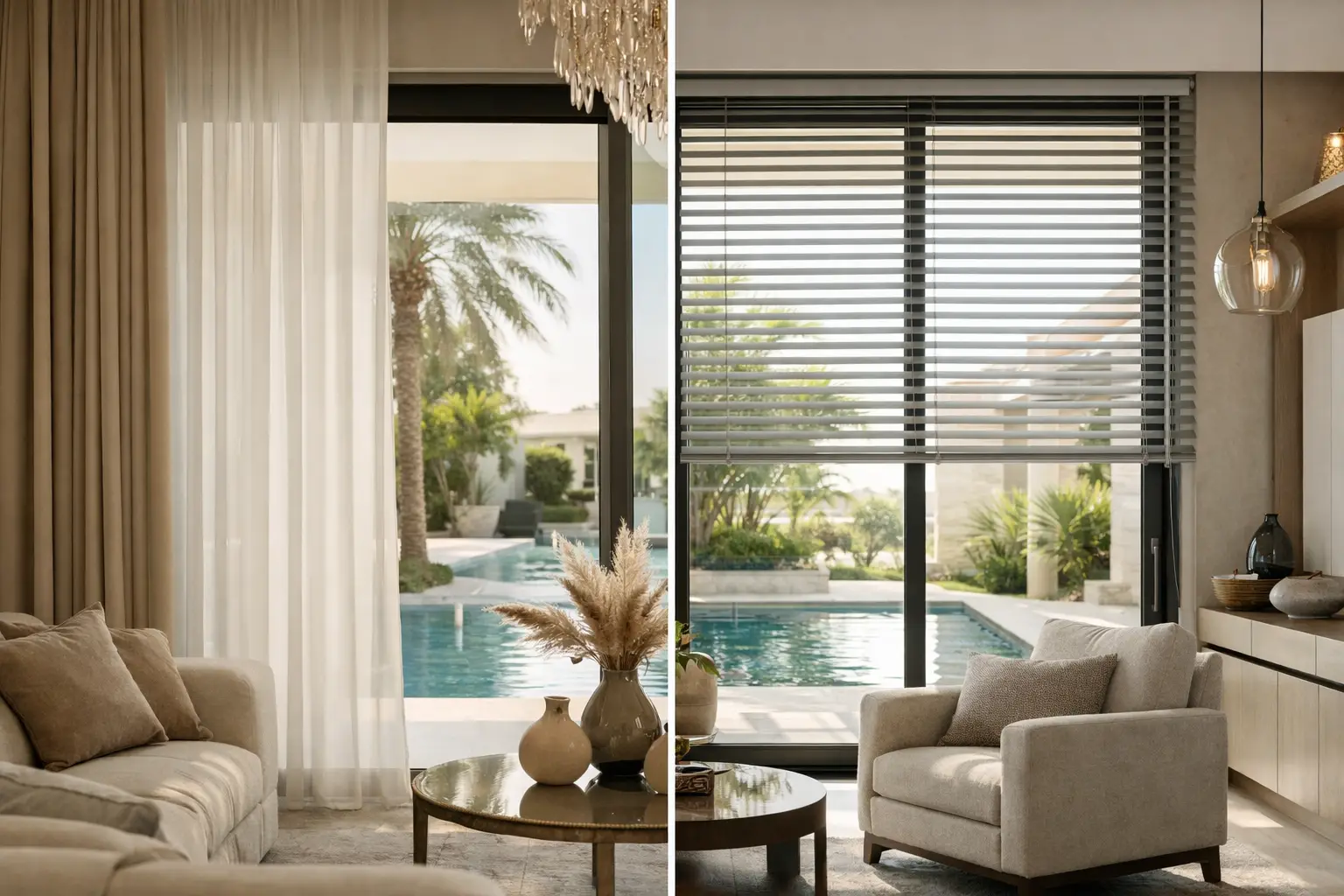
A villa window treatment is not a final decorative purchase. It affects daylight, privacy, heat gain, acoustics, room proportion, and the quality of the finished interior. When considering curtains vs blinds for villas, the better choice is rarely one product across every room. A formal living room with double-height glazing has different requirements from a bedroom, a study, or a narrow kitchen window.
For premium villas in Dubai and Sharjah, the decision should begin with the architecture and daily use of the space. Window treatments need to sit correctly with false ceilings, curtain pockets, wall paneling, furniture layouts, and glazing dimensions. This is why they should be planned during the fit-out stage, not selected after the major works are complete.
Curtains vs Blinds for Villas: The Core Difference
Curtains use fabric to soften a room, control light, and add visual scale. They are especially effective where a villa needs warmth, better acoustics, and a more complete, layered finish. Made-to-measure curtains can extend from ceiling to floor, making modest windows feel taller and framing large sliding doors with a sense of proportion.
Blinds are more structured and compact. They offer controlled adjustment of light and privacy while keeping the window area visually clean. Roller blinds, Roman blinds, Venetian blinds, and vertical blinds each perform differently, but they generally suit spaces where a tailored, minimal appearance or precise solar control is the priority.
Neither option is automatically more premium. The result depends on material quality, correct measurement, hardware, installation accuracy, and how well the treatment relates to the rest of the interior. A high-quality blind installed within a carefully prepared recess can look refined. Equally, full-height curtains with poor track placement or insufficient fullness can make an expensive room feel unfinished.
When Curtains Are the Better Choice
Curtains are often the strongest choice for villa living rooms, formal lounges, family rooms, bedrooms, and large glazed openings. They bring softness to interiors that include stone flooring, marble, timber veneer, glass, or extensive joinery. These hard finishes look elegant but can create echo; lined fabric curtains help absorb sound and make the room feel more comfortable.
Large Windows and Double-Height Areas
A large window needs visual weight. Blinds alone can appear undersized or overly functional on wide glazing, especially in double-height spaces or rooms opening onto a garden, terrace, or pool. Full-height curtains establish a vertical line from ceiling to floor and give the architecture a more intentional finish.
For expansive openings, a layered solution is usually the most practical. A sheer curtain can diffuse harsh daylight during the day while preserving a light atmosphere. A heavier drapery layer can then provide evening privacy, greater room darkening, and a more formal appearance. The tracks must be planned early enough to allow proper stacking space at either side of the glazing.
Bedrooms That Need Better Light Control
Bedrooms often benefit from blackout-lined curtains, particularly in villas with early sun exposure, exterior lighting, or neighboring properties nearby. Blackout fabric helps reduce incoming light, but it is not the only factor. Light can still enter through gaps at the top, sides, and bottom if tracks, returns, and wall conditions are not considered correctly.
For the best result, blackout curtains can be paired with a discreet blackout roller blind behind them. This combination gives strong light control without sacrificing the softness and scale that curtains bring to a bedroom.
Interiors That Need Warmth and Texture
Curtains make the greatest difference in spaces that feel visually hard or sparse. Linen-look sheers, textured woven fabrics, and carefully selected drapery materials introduce depth without making the scheme busy. The fabric should complement the wall color, upholstery, flooring, and joinery rather than compete with them.
In a premium villa, the detail is not only the fabric. It is the fullness ratio, header style, lining, hem finish, track quality, and how the curtains fall when opened and closed. These decisions distinguish a tailored installation from a standard window covering.
When Blinds Are the Better Choice
Blinds are often more suitable for kitchens, bathrooms, studies, dressing rooms, staff areas, and smaller windows where curtain fabric may feel excessive. They are also valuable where homeowners want daylight control without fully covering the view.
Spaces Requiring Precise Daylight Adjustment
Roller blinds and Venetian blinds allow a controlled response to sun exposure. This is useful in a home office where direct light causes glare on screens, or in a media room where the light level needs to change at different times of day. Solar screen roller blinds can reduce glare and filter daylight while maintaining partial outward visibility.
For west-facing windows, consider the intensity of late-afternoon sun rather than choosing only by appearance. The fabric openness factor, blind color, and installation position all affect performance. A specialist should assess whether the blind is intended for privacy, glare reduction, heat reduction, or blackout, because one material does not serve every purpose equally well.
Wet Areas and Practical Rooms
Bathrooms and kitchens need materials that are appropriate for humidity, splashes, and regular cleaning. Aluminum Venetian blinds, moisture-resistant roller blinds, or selected faux-wood options may be more practical than fabric curtains in these areas. The choice should also account for ventilation, window operation, and the location of taps, tubs, and cooking surfaces.
Roman blinds can work in powder rooms and selected bedrooms where a softer fabric treatment is desired but full-height curtains are not practical. They should be made and installed with the same care as upholstery or joinery, particularly when patterned fabrics need accurate alignment.
Minimal Architectural Interiors
Some villas are designed around clean, contemporary lines, concealed details, and uninterrupted wall finishes. Recessed roller blinds can suit this architecture well. When concealed within a properly designed ceiling pocket, they provide function with minimal visual interruption.
However, minimal does not mean generic. Blind cassettes, side channels, brackets, and bottom bars must be selected in finishes that integrate with the surrounding interior. Poorly coordinated hardware can draw attention immediately, particularly against timber veneer, microcement, or light-colored wall paneling.
The Best Villa Solution Is Often Both
The most effective answer is frequently not curtains or blinds, but curtains and blinds working together. This approach lets each layer perform a specific role: sheer curtains soften daylight and protect privacy during the day; roller blinds manage glare or provide blackout; decorative drapery adds comfort, scale, and a finished appearance.
This combination is particularly suited to master bedrooms, formal living areas, and villas with extensive glazing. It also provides flexibility for different times of day without forcing the homeowner to choose between light, privacy, and aesthetics.
The key is avoiding unnecessary bulk. Tracks and blinds must be coordinated so they operate independently, stack neatly, and do not interfere with door handles, air-conditioning grilles, window openings, or furniture placement. A site measurement before production is essential, especially where walls and ceilings are not perfectly straight.
Consider the Villa's Architecture Before Selecting Fabric or Hardware
Window treatments should follow the architectural conditions, not fight them. Before finalizing a selection, assess ceiling height, window depth, opening direction, mullion locations, wall clearance, and the distance between glazing and adjacent furniture. These details determine whether tracks can be concealed, whether blinds should sit inside or outside the recess, and how much fabric is needed to cover the opening properly.
For example, a curtain track mounted too low can make a high ceiling feel reduced. A blind installed inside a shallow recess may project awkwardly or leave visible side gaps. A sliding door may need curtains that stack fully clear of the opening so circulation to the terrace remains easy.
Motorization may be worth considering for tall windows, wide curtains, or hard-to-reach locations. It offers convenience, but it should be specified early, with power points and control requirements coordinated before ceilings and wall finishes are closed. Retrofitting can be possible, though early planning produces a cleaner result.
Maintenance and Long-Term Use
Curtains require periodic professional cleaning or careful fabric-specific maintenance, especially in homes exposed to dust from open terraces or frequent garden access. Lined curtains tend to hold their form better and can offer improved durability, but the fabric must still suit the room's use.
Blinds are generally quicker to wipe or vacuum, although their mechanisms and slats need regular attention. Venetian blinds can collect dust on individual slats, while roller blinds are simpler in form but may show marks if handled carelessly. In either case, quality mechanisms matter. A window treatment is used daily, and weak tracks or poorly fitted components soon become noticeable.
Plan Window Treatments as Part of the Fit-Out
The right choice is not about following a single rule for every room. Use curtains where the villa needs scale, softness, acoustic comfort, or layered privacy. Use blinds where clean lines, controlled daylight, and practical operation matter most. Combine both where the room needs a complete solution.
For renovation projects, window treatments should be coordinated alongside ceiling works, joinery, electrical planning, upholstery, and furniture layouts. Time Furniture approaches this as part of complete interior execution, allowing curtain tracks, blind recesses, finishes, and custom furnishings to be considered together rather than treated as separate afterthoughts. A well-planned window treatment does more than cover glass - it supports the way the entire villa looks and lives.