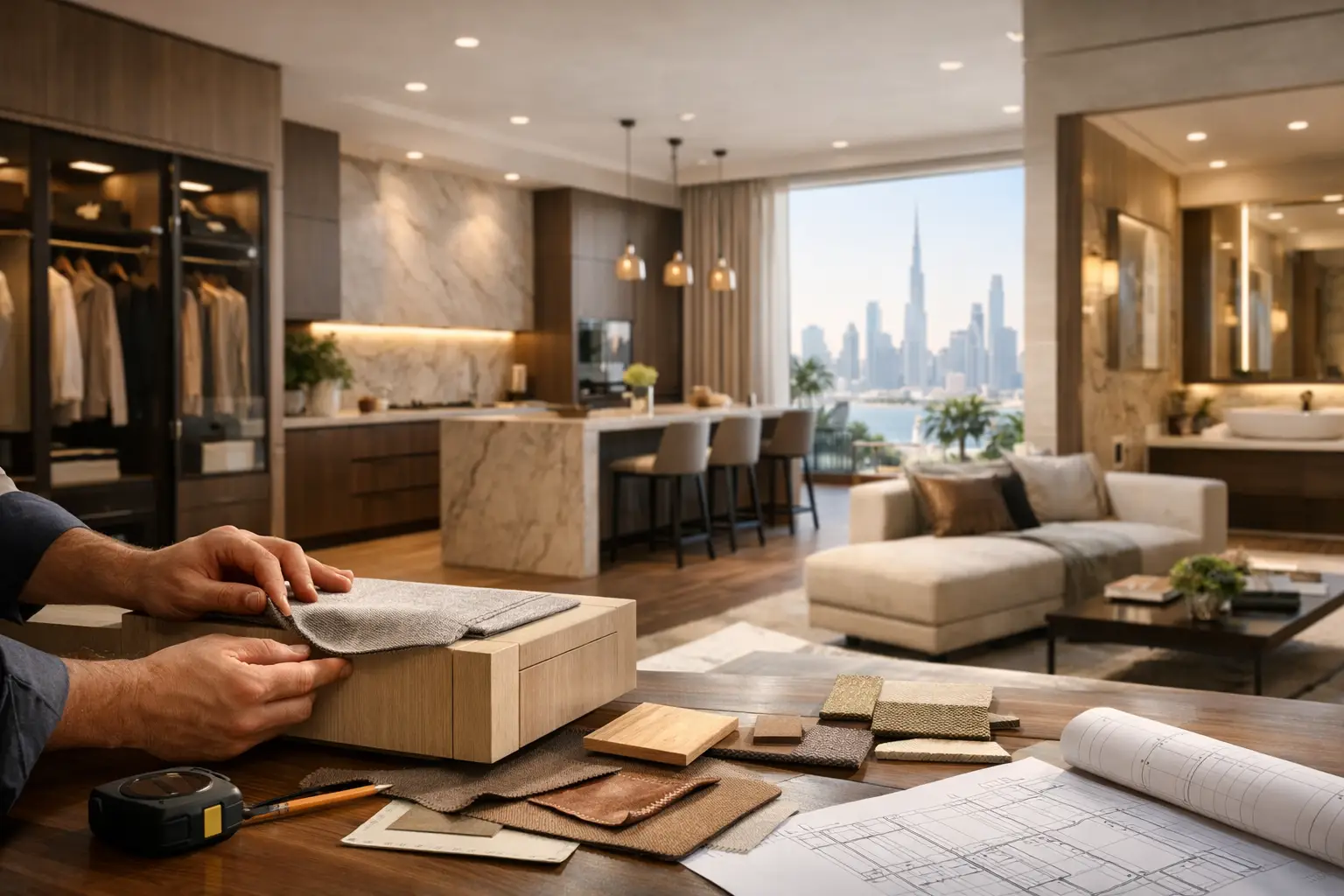
A wardrobe that looks good in a showroom can still fail in a real apartment. Ceiling drops interfere with doors, wall lines are rarely perfect, and standard sizes almost never make the best use of space. That is why many property owners looking for a custom furniture manufacturer UAE partner are not just buying furniture - they are solving layout, finish, and execution problems at the same time.
In premium homes and commercial interiors, furniture is part of the fit-out, not an afterthought. A bed wall may need integrated paneling and lighting. A walk-in closet has to work around MEP points, slab offsets, and actual storage habits. A sofa must suit the room proportions, fabric performance, and circulation clearances. The right manufacturer understands these realities and builds accordingly.
What a custom furniture manufacturer in UAE should really deliver
A serious custom furniture manufacturer in UAE should offer more than fabrication. The real value is in translating design intent into pieces that fit the site, match the wider interior scheme, and hold up in daily use. That requires technical drawings, material knowledge, production control, and installation experience.
This is where many projects become more demanding than clients expect. The furniture has to align with flooring levels, wall finishes, skirting details, curtain pockets, and electrical points. If these elements are handled by separate vendors with limited coordination, the result can feel disjointed even when each item looks acceptable on its own.
For villa renovations, apartment upgrades, and turnkey interior execution, the strongest model is often one company handling both site works and in-house production. That reduces the gap between design decisions and final installation. It also improves accountability when adjustments are needed.
Why custom furniture makes sense in UAE properties
Standard furniture works well for some spaces, but premium properties often need a more exact response. Floor plans in Dubai and Sharjah vary widely, and many homes include layouts where ready-made options create dead space, awkward proportions, or visual imbalance.
Custom furniture is especially valuable when storage needs to be precise. Full-height wardrobes, walk-in closets, media units, bed backs, study joinery, window seating, and banquette seating all perform better when designed around the actual room. In these cases, custom work is not about decoration alone. It is about function, alignment, and finish quality.
There is also a practical durability advantage. Material selection can be matched to the environment and use case. That may mean choosing upholstery suitable for high-traffic family living, finishes that are easier to maintain, or joinery details that support long-term use. Good custom work gives the client more control over how the finished interior will live, not just how it will photograph.
The difference between a supplier and an execution partner
This distinction matters. A furniture supplier typically focuses on producing an item based on dimensions and finish selections. An execution partner looks at the wider project - access, measurements, installation conditions, sequencing with other trades, and how each piece integrates with the surrounding works.
If you are renovating a villa or apartment, this difference affects the final result. A custom wardrobe cannot be treated as an isolated product when wall straightness, floor finish thickness, AC bulkheads, and lighting placement all affect its final fit. The same applies to custom sofas, wall panels, curtains, headboards, vanities, and built-in joinery.
Working with an experienced contractor-manufacturer helps avoid the common disconnect between site and workshop. Measurements are checked against real conditions. Drawings are reviewed with installation in mind. Finishes are selected in relation to the overall interior rather than as stand-alone samples. That coordination often saves more time and frustration than clients initially realize.
How to evaluate a custom furniture manufacturer UAE clients can rely on
The first question is not style. It is capability. Can the company handle joinery, upholstery, finishing, and installation with consistent quality control? Can it coordinate with renovation works if the project includes bathrooms, kitchens, wall finishes, flooring, or partitions? Those answers tell you more than a polished presentation ever will.
Ask how the process is managed from site visit to production approval. A dependable manufacturer should be able to explain measurement procedures, shop drawings, material sign-off, production timelines, and installation sequencing in a clear way. If the answers are vague, the risk usually shows up later in rework and delays.
You should also assess whether production is genuinely in-house or partially outsourced. Outsourcing is not always a problem, but it changes control. For clients investing in high-value interiors, in-house teams usually offer better oversight of workmanship, consistency, and corrective action.
Experience in renovation and fit-out is another strong indicator. Custom furniture for a new shell-and-core commercial unit is one thing. Custom furniture for an occupied villa renovation or a high-rise apartment with access constraints is another. Site conditions influence everything from piece sizing to installation strategy.
Materials, detailing, and why finishing quality matters
Premium custom furniture is judged at close range. Door gaps, edge alignment, veneer matching, stitching, cushioning, and paint consistency all become visible once the piece is installed. That is why material specification and finishing standards matter as much as design.
For joinery, the right substrate and finish system depend on the application. Painted pieces, veneered surfaces, laminate combinations, upholstered panels, and fluted or profile details each require different production discipline. The same is true for hardware. Hinges, runners, internal accessories, and fixing methods affect both daily usability and long-term performance.
In upholstery, comfort and shape retention are just as important as appearance. Foam density, internal structure, fabric behavior, and tailoring quality all influence whether a sofa or bed feels refined after months of use. A well-made piece should balance aesthetics with practical support, clean proportions, and serviceable materials.
There is always a trade-off between visual ambition and maintenance. Some finishes create a striking look but require more care. Others are more forgiving in busy homes or rental properties. An experienced manufacturer should discuss these decisions honestly rather than pushing every client toward the same solution.
Custom furniture within a full renovation scope
This is where integrated execution has a clear advantage. When custom furniture is planned together with flooring, wall treatments, curtains, lighting positions, and general renovation works, the final interior feels more resolved. Dimensions are coordinated earlier. Finishes are selected as a complete scheme. Installation happens in a cleaner sequence.
For example, a walk-in closet should relate to flooring transitions, ceiling design, and mirror placement. A custom TV wall may combine paneling, shelving, hidden wiring, and decorative finishes. A bedroom package might include the bed, side tables, wall panels, blackout curtains, and wardrobes as one coordinated scope rather than disconnected items from different vendors.
This approach is especially effective for property owners who want one accountable company managing execution under one roof. It reduces the burden of chasing separate contractors and makes quality control easier across the project.
Companies with long-standing in-house capabilities are often better positioned for this kind of delivery. Time Furniture, established in the UAE since 1993, is one example of a contractor-execution model where joinery, upholstery, curtains, renovation, and interior finishing can be coordinated through a single experienced team.
Who benefits most from custom manufacturing
Homeowners upgrading a primary residence usually value custom work for fit, comfort, and finish consistency. They want interiors that feel designed around the property rather than furnished around stock availability. In premium communities, this level of tailoring often has a visible effect on the overall standard of the home.
Landlords and investors also benefit, though for slightly different reasons. Well-executed built-ins, wardrobes, upholstered beds, and integrated storage can improve presentation, usability, and perceived value. The key is choosing specifications that are durable and appropriate for the target tenant or buyer profile.
Commercial clients often need custom furniture because branded identity, operational layout, and site conditions leave little room for off-the-shelf solutions. Reception desks, wall paneling, seating, display units, and storage systems usually perform best when built for the actual space.
What to expect from the process
A professional custom furniture process should begin with a proper site review and a clear understanding of the interior scope. That includes dimensions, design direction, material preferences, performance needs, and any coordination with renovation or fit-out works.
From there, drawings and selections should move toward approval before production starts. This stage is where many costly errors are prevented. It confirms not only what the piece will look like, but how it will be built and installed. Clients should expect practical guidance here, especially when a preferred design detail conflicts with access, maintenance, or structural conditions.
Installation should be handled with the same care as manufacturing. Even a well-made item can look poor if site protection, leveling, fixing, or final adjustments are rushed. Good execution shows in the last 5 percent of the work.
Choosing a custom furniture manufacturer is really choosing how much control, coordination, and finishing quality you want in the final interior. The best outcomes usually come from experienced teams that understand both craftsmanship and site execution - because a custom piece should do more than fit the room. It should make the entire space feel properly finished.