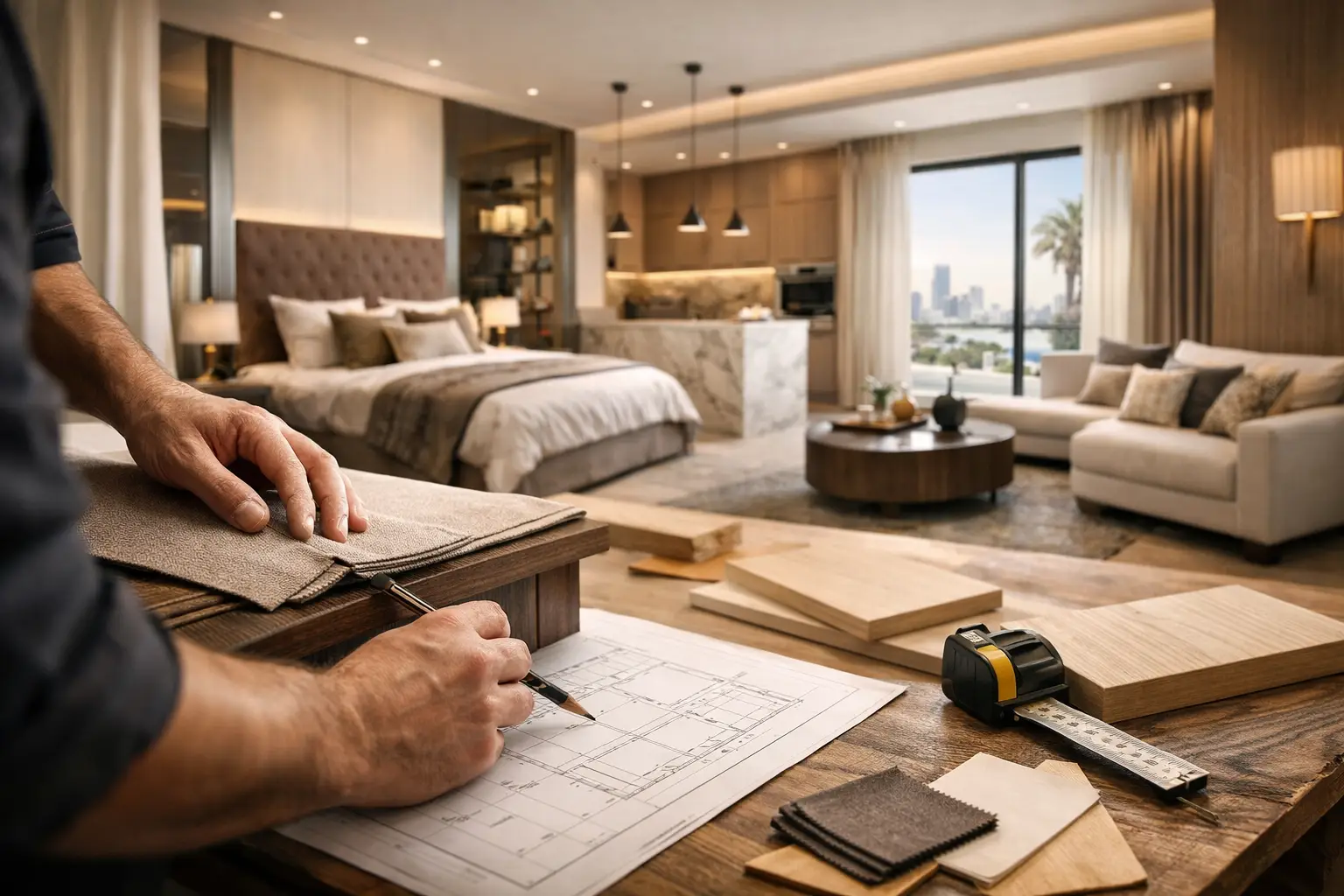
A beautiful room can still feel unresolved when the furniture is the wrong size, the finish does not match the joinery, or the layout ignores how the space is actually used. That is where custom furniture manufacturing becomes more than a design preference. It becomes a practical part of getting an interior right - especially in villas, apartments, and fit-out projects where proportions, materials, and execution all need to work together.
In premium residential interiors, furniture should not look like an afterthought. It should respond to the room, align with the architectural details, and support daily use without compromise. For property owners planning a renovation or interior upgrade, custom manufacturing offers a level of control that standard retail furniture rarely delivers.
Why custom furniture manufacturing matters
The main advantage of custom furniture manufacturing is fit. Not just physical fit against a wall or within a niche, but visual and functional fit across the whole interior. A custom sofa can be sized around circulation space. A bed can be designed to match wall paneling and side tables. A dining table can be produced to suit the room scale, lighting placement, and number of users rather than forcing the layout to adapt.
That matters even more in homes with architectural constraints. Apartments often have tight access, unusual corners, or structural columns that limit furniture options. Villas may have larger rooms that make standard pieces feel undersized or disconnected. In both cases, made-to-measure furniture solves a problem that off-the-shelf products often create.
There is also the issue of consistency. In a high-end interior, furniture, wardrobes, wall cladding, curtains, flooring, and upholstery should feel coordinated. If these elements are sourced from separate vendors with separate production standards, the final result can lose cohesion. Tone, texture, dimensions, and installation quality can vary more than expected.
What quality looks like in custom furniture manufacturing
Not all custom work is equal. The term sounds premium, but the result depends entirely on how the furniture is designed, built, upholstered, finished, and installed. Good manufacturing starts with technical understanding, not just attractive sketches.
Joinery construction is one of the clearest indicators of quality. The internal build matters as much as the visible surface. A cabinet that looks refined on day one but warps, sags, or misaligns after installation is not a quality product. Material selection, edge treatment, hardware choice, and structural support all affect longevity.
The same applies to upholstered furniture. A custom sofa should be judged by frame integrity, foam density, seat comfort, fabric application, stitching quality, and proportion. The shape may be elegant, but if the seating depth is wrong or the upholstery is poorly executed, the piece will disappoint in daily use.
Finishing is another area where experienced manufacturers stand apart. Paint, veneer, laminate, fabric, metal details, and stone integration all need proper handling. The best results come from teams that understand how finishes behave in real interiors, including exposure to sunlight, air conditioning, humidity, and regular wear.
The benefit of in-house production
For clients planning renovation or fit-out work, one of the biggest advantages is working with a company that combines site execution with in-house furniture and joinery production. This is not just an operational detail. It directly affects accountability, coordination, and final quality.
When furniture is manufactured by an external supplier with limited site involvement, problems tend to appear late. Measurements may not reflect final wall finishes. Delivery timing may not align with site readiness. If ceiling details, wall panels, flooring levels, or electrical points change during execution, the furniture package can quickly fall out of sync.
An in-house setup reduces those gaps. The same team can coordinate dimensions, finishes, site conditions, and installation sequencing more accurately. That creates a more controlled process, especially in turnkey interiors where wardrobes, beds, vanities, consoles, media units, wall paneling, curtains, and upholstered items need to align.
For homeowners and property investors, this usually means fewer handover issues and less time spent managing separate suppliers. It also creates clearer responsibility. If one execution partner is handling the renovation works, joinery, upholstery, and custom furniture, there is less room for blame shifting between contractors.
Custom furniture manufacturing in renovation projects
Furniture decisions should not be left until the end of a renovation. In many interiors, they should be considered early because they affect space planning, lighting, wall composition, and service coordination.
A custom bed wall may need electrical points placed in exact locations. A dining area may require the table size to be confirmed before pendant placement is finalized. A walk-in closet island has implications for circulation and flooring transitions. Built-in seating can affect wall preparation and upholstery detailing. These are not small finishing choices. They are part of the execution logic of the project.
This is why custom furniture manufacturing works best when it is integrated into the broader interior scope. The furniture is then developed with full awareness of civil works, ceiling details, flooring, paint finishes, and installation access. That usually leads to a better result than trying to insert independent pieces after the site is already complete.
Where custom manufacturing adds the most value
Some spaces benefit more than others. Bedrooms are a strong example because proportion is everything. A bed, side tables, bench, dresser, wall panels, and curtains all sit within one visual frame. When these pieces are designed together, the room feels intentional rather than assembled.
Living rooms also benefit because comfort and scale are difficult to get right with standard sizes alone. A custom sectional can be shaped to suit the room and family use pattern, while accent chairs, ottomans, and coffee tables can be coordinated around circulation and finishing materials.
Wardrobes, walk-in closets, TV units, study desks, and entrance consoles are also strong candidates. These are pieces where storage, dimensions, and architectural fit matter as much as appearance. In premium apartments and villas, these details often define whether the interior feels complete.
Commercial spaces can gain similar value. Reception counters, banquette seating, executive desks, display units, and meeting tables often need to reflect brand standards while meeting practical site requirements. Custom manufacturing gives more control over both.
Trade-offs clients should understand
Custom work is not automatically the right answer for every item. It depends on the function, lead time, and required level of uniqueness. Some decorative accessories or movable side pieces may not need bespoke production. The value of customization is highest where dimensions, integration, or finishing coordination are critical.
Lead time is another factor. Good custom furniture takes planning, approvals, material coordination, and proper fabrication. Clients who decide too late may compress the process and reduce options. That does not mean custom is slow by default, but it does require organized execution.
There is also a difference between visual customization and true manufacturing quality. Changing fabric or color alone is not the same as engineering a piece properly. Serious clients should ask how the item will be built, what materials are being used internally, and how site measurement and installation will be handled.
Choosing the right execution partner
If custom furniture is part of a wider renovation or fit-out, the best partner is usually not just a furniture supplier. It is a company that understands interiors as a complete system. That includes measurements, production drawings, material coordination, site readiness, installation quality, and after-completion accountability.
Experience matters here. Long-standing contractors and interior execution companies tend to manage custom manufacturing with more discipline because they understand what happens before and after production. They know that a wardrobe is affected by wall alignment, that a vanity depends on plumbing positions, and that upholstery selections need to make sense within the overall material palette.
For clients in Dubai and Sharjah, this level of coordination is especially valuable in high-spec homes where expectations are high and timelines need control. Time Furniture has built its reputation around exactly this kind of integrated execution - combining renovation, joinery, upholstery, curtains, furniture, and finishing works under one roof.
Custom furniture should make a space feel settled, proportioned, and properly finished. When it is designed and manufactured with technical care, it does more than fill a room. It helps the entire interior perform the way it was intended.