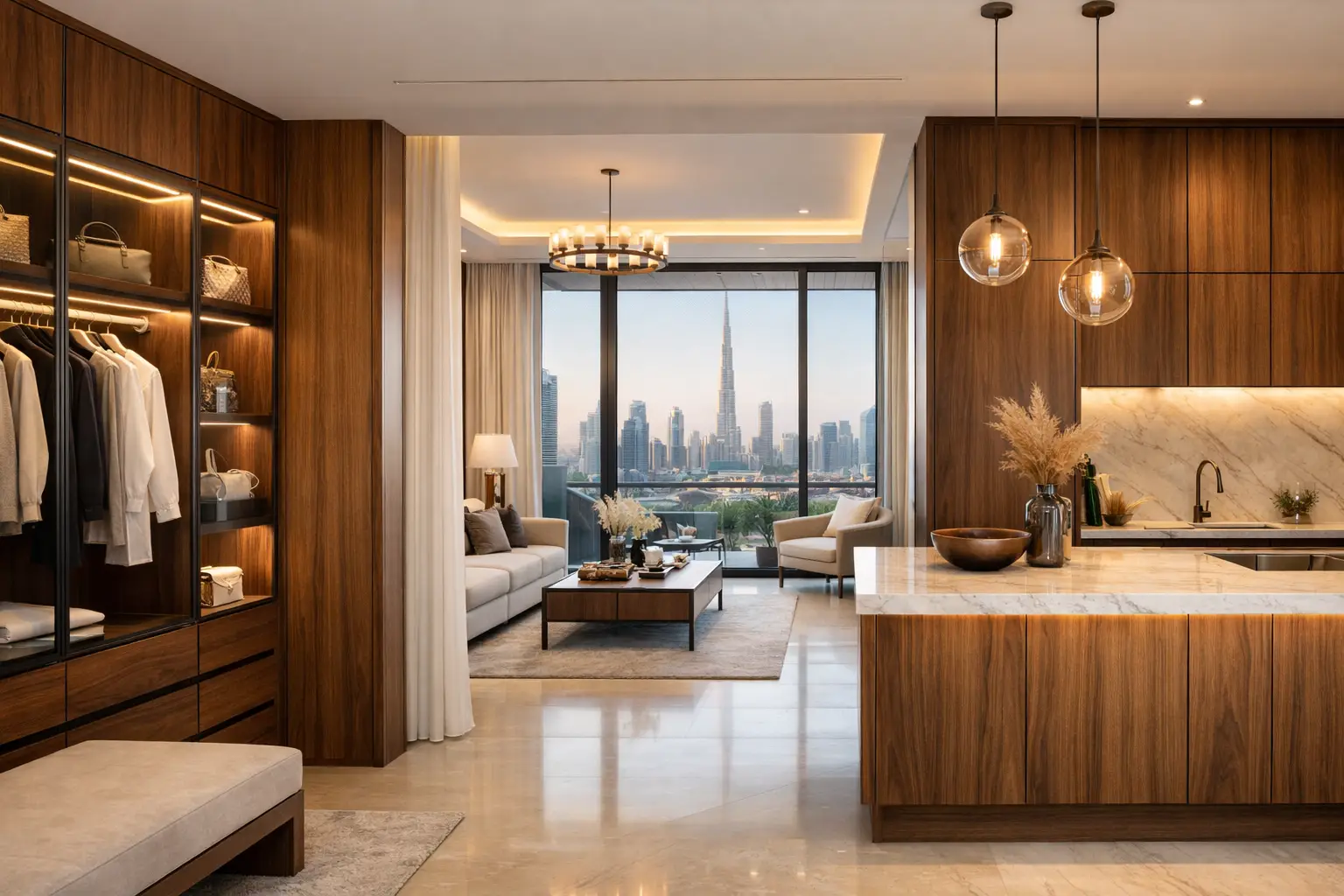
A poorly planned wardrobe or kitchen does not just waste space. In Dubai, where layouts vary widely between villas, towers, and branded communities, the wrong joinery can affect storage, movement, finishes, and even how valuable a property feels. That is why custom joinery services Dubai clients choose tend to be less about furniture alone and more about execution, fit, and long-term quality.
For property owners investing in a renovation or fit-out, joinery sits at the center of the final result. It shapes kitchens, wardrobes, walk-in closets, TV units, bathroom vanity cabinets, wall cladding, doors, shelving, and feature panels. If the joinery is well designed and properly built, the interior feels precise and complete. If it is not, even premium materials elsewhere can look inconsistent.
What custom joinery services in Dubai really cover
Custom joinery is often misunderstood as cabinet making only. In practice, it covers a much broader set of built elements that need accurate site measurement, workshop production, finishing control, and clean installation.
In residential projects, that usually includes kitchens, wardrobes, closet systems, laundry cabinetry, vanity units, wall paneling, media walls, headboards, study units, shoe cabinets, and made-to-measure storage. In higher-end villas and apartments, it may also include decorative ceiling details, timber cladding, concealed doors, and integrated furniture pieces designed around the architecture.
For commercial spaces, joinery can include reception desks, display shelving, wall features, banquette seating bases, meeting room cabinetry, and branded interior details. The common factor is that these elements are built specifically for the site rather than selected off the shelf.
That distinction matters. Standard products can work in some spaces, but many Dubai properties have dimensions, service routes, ceiling details, and finish expectations that require a more tailored approach. A wardrobe around a structural beam, a kitchen shaped around MEP points, or a wall panel system aligned with lighting and stone work all demand proper joinery coordination.
Why custom joinery services Dubai projects depend on coordination
The quality of joinery is not decided in the workshop alone. It starts earlier, with site conditions, measurements, shop drawings, finish selection, and coordination with other trades.
This is where many projects become difficult for clients. If civil work is handled by one contractor, cabinetry by another, upholstery by someone else, and curtains by a separate supplier, small gaps in coordination become visible very quickly. Wall levels affect paneling. Flooring height affects door clearances. Electrical points affect display units and dressing tables. Stone templates affect kitchen base units and vanity alignment.
A joinery contractor working in isolation can produce good pieces, but the best project outcomes usually come when joinery is part of a wider execution scope. That creates clearer accountability. There is less room for disputes about who measured what, who adjusted site conditions, or who caused installation delays.
For villa renovations and apartment upgrades, this one-roof approach is especially practical because the joinery interacts with almost every visible finish. It is not a standalone package. It is part of the full interior build.
What separates premium joinery from average work
At first glance, two wardrobes can look similar in photos. The difference becomes obvious in person and over time.
Premium joinery starts with proportion and fit. Reveals should be consistent. Shutters should align properly. Internal layouts should suit how the client actually uses the space rather than follow a generic module. Drawers should operate cleanly, doors should close well, and materials should suit the function of the room.
Finishing quality is equally important. Edges, veneer matching, laminate application, paint smoothness, handle placement, and shadow gaps all affect the final impression. In a premium apartment or villa, clients notice these details immediately because the surrounding environment sets a high standard.
Then there is durability. Kitchens and wardrobes are used daily. Moisture resistance, hardware quality, substrate selection, internal reinforcement, and installation method all matter. A beautiful finish is not enough if units swell, sag, or lose alignment after regular use.
This is why experienced execution teams ask technical questions early. The right specification depends on the room, the expected usage, the finish type, and the wider renovation scope. There is rarely one universal solution.
Material selection is never just aesthetic
Clients often start with a visual reference, which is natural. But joinery materials need to be chosen with performance in mind as well.
A painted finish may suit a formal living area, while a textured laminate can be more practical in a family kitchen. Veneer can create warmth and depth, but it requires careful finishing and matching. Bathroom joinery needs better consideration for humidity. Wardrobe interiors need to balance appearance with daily wear.
The best joinery decisions happen when design intent and technical use are considered together. That prevents expensive revisions later.
Factory capability affects the final finish
Not every joinery supplier has the same production standards. In-house capability makes a difference because it gives better control over fabrication quality, finish consistency, and scheduling.
When joinery is outsourced through multiple layers, lead times can become harder to control and responsibility becomes less clear. By contrast, a company that combines site execution with in-house production is usually in a stronger position to coordinate modifications, maintain standards, and respond faster when site realities change.
Where custom joinery adds the most value
Not every space needs a dramatic feature wall. Good joinery adds the most value where it solves a real problem or improves how the property functions.
Kitchens are the obvious example. A well-planned kitchen improves workflow, appliance integration, storage access, and visual order. In apartments, this can make the room feel larger and more refined. In villas, it helps organize a heavier level of daily use.
Wardrobes and walk-in closets are another strong investment. Off-the-shelf storage often wastes vertical space and fails to account for actual clothing, accessories, and lifestyle needs. Custom joinery allows better zoning, stronger proportions, and cleaner integration with lighting and mirrors.
Wall paneling and media units can also change the feel of a property significantly when done well. They help organize large blank walls, conceal services, and create architectural depth. The trade-off is that they need accurate design restraint. Too much paneling can feel heavy; too little can feel unfinished. The right balance depends on the room size, ceiling height, and overall material palette.
For investors and landlords upgrading premium rental properties, custom joinery can make a property more competitive without changing the entire layout. Built-in storage, upgraded vanities, refined TV walls, and improved bedroom cabinetry often have a direct impact on presentation and perceived quality.
Choosing the right custom joinery partner
Property owners should look beyond visuals alone. A joinery partner should be able to explain how the work will be measured, detailed, produced, finished, delivered, and installed.
That means reviewing drawings, discussing materials clearly, checking whether production is handled in-house, and understanding how the joinery will coordinate with flooring, lighting, marble, paint, wallpaper, and civil work. Strong execution is usually a sign of strong process.
Experience also matters in the Dubai market because building types vary so much. A high-rise apartment with service restrictions, tower access windows, and compact core walls presents different challenges from a large villa renovation with layered custom detailing. Both require technical awareness, but the planning logic is not the same.
Established firms with broader fit-out and renovation capability are often a better fit for clients who want fewer moving parts. When one contractor can handle interior renovation, joinery, upholstery, curtains, wall finishes, and related works together, the result is usually more controlled and less stressful.
Time Furniture is positioned around exactly that model - complete interior execution supported by in-house craftsmanship and practical project coordination.
Why this matters more in renovation projects
In new spaces, joinery can be designed around clean conditions. In renovation projects, there are always variables. Existing walls may not be fully level. Old MEP points may need adjustment. Ceiling heights may change after service work. Flooring buildup can affect thresholds and cabinet lines.
That is why renovation joinery requires more than production skill. It requires site awareness and a contractor mindset. Teams need to resolve conditions before installation instead of simply building to an assumed drawing.
For homeowners in premium communities, this level of control is often what separates a polished renovation from one that feels pieced together. The client is not just buying cabinets. They are buying accuracy, finish quality, and accountability across the whole process.
Custom joinery works best when it is treated as part of the architecture of the home, not an afterthought added near the end. If the planning is right, the result feels quiet, precise, and built for the property from day one. That is usually the standard worth aiming for.