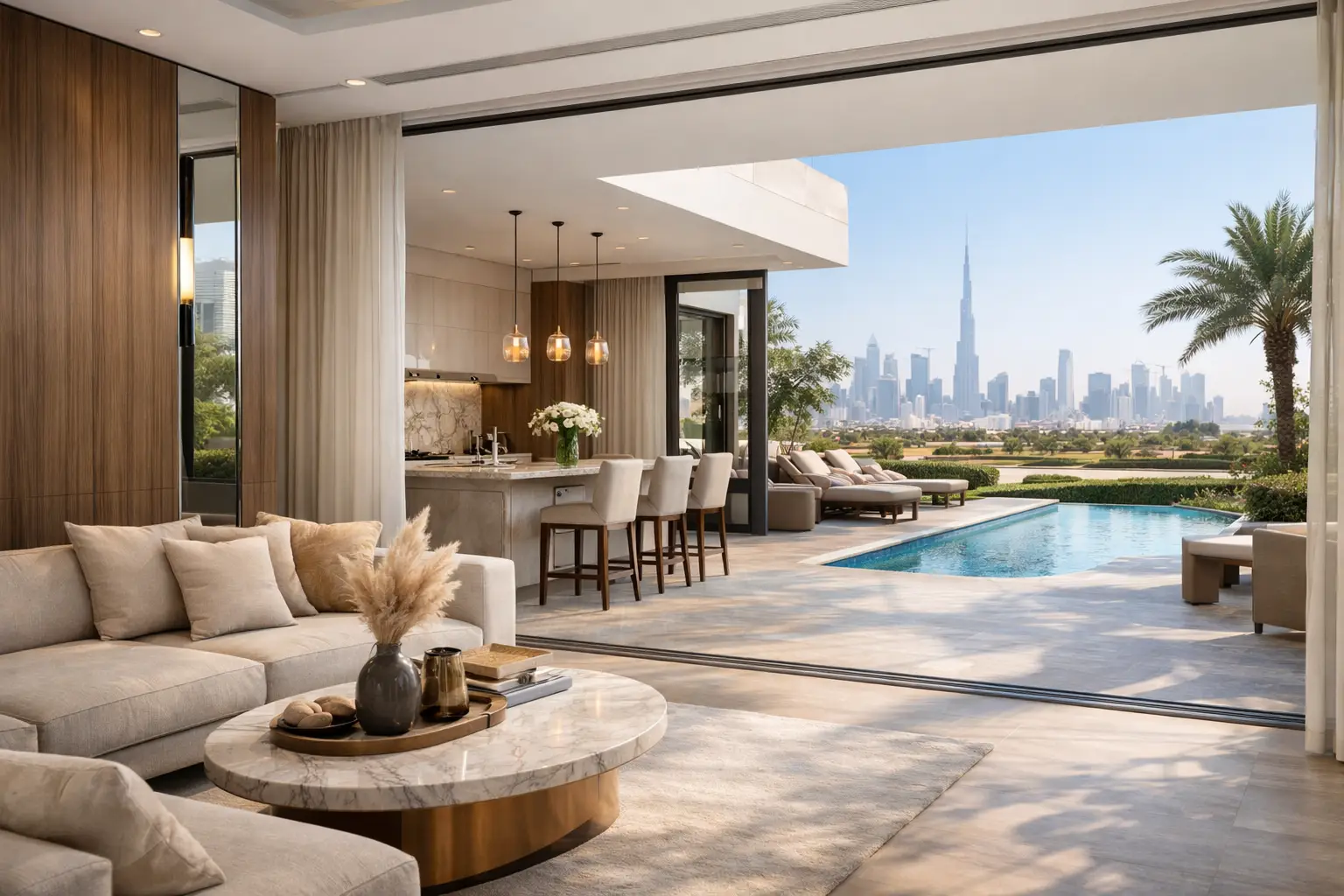
A Dubai Hills villa renovation usually starts with a clear ambition - improve the way the home looks, functions, and feels without turning the process into a coordination problem. In this community, expectations are high. Owners want better layouts, stronger finishing quality, cleaner detailing, and a result that fits the value of the property.
That is why renovation here is rarely just about replacing finishes. It often means reworking kitchens, upgrading bathrooms, refining wardrobes, improving flooring, introducing custom wall treatments, and aligning furniture, curtains, upholstery, and joinery into one cohesive interior. The difference between a frustrating project and a well-managed one usually comes down to execution discipline.
What makes a Dubai Hills villa renovation different
Dubai Hills Estate attracts homeowners who are not looking for surface-level changes. Many villas are already in desirable locations with strong architectural value, so the goal is not to rebuild the property identity. The goal is to elevate it.
That creates a different renovation standard. Finishes need to feel proportionate to the home. Joinery must look tailored rather than added later. Bathroom upgrades need to be technically sound, not only visually attractive. Kitchen renovation has to balance layout, appliance integration, storage, and material durability. In premium communities, poor alignment, weak edge details, visible gaps, and rushed paintwork stand out immediately.
Another factor is project coordination. A villa renovation involves multiple trades moving in sequence - demolition, civil modifications, MEP adjustments, ceilings, flooring, joinery, painting, wallpaper, upholstery, curtain installation, and final detailing. When these packages are split across too many vendors, accountability becomes weak. Delays and finish conflicts follow.
Planning the scope before work begins
A successful Dubai Hills villa renovation depends on defining the real scope early. Many owners begin with one room in mind and later realize the work needs to extend across connected spaces for consistency. A new kitchen can make adjacent flooring look dated. A luxury bathroom upgrade can expose weaker finishing in the master wardrobe area. A refreshed living room often leads to custom sofas, wall panels, curtains, and rug selection to complete the look.
This is where professional scoping matters. Not every villa needs a full strip-out. In some cases, the right approach is selective renovation - keep the layout, improve the finish package, replace joinery, upgrade bathrooms, and rework decorative elements. In other cases, the home needs deeper intervention, especially when owners want new partitioning, integrated storage, revised lighting positions, or a more contemporary interior language.
The right contractor will challenge assumptions where needed. Keeping an existing element can save time if the base condition is sound. But preserving the wrong item often creates compromise later. It depends on the age of the villa, the condition of existing works, and how far the design intent differs from the current space.
The rooms that shape the overall result
Kitchens and service areas
Kitchen renovation is one of the most visible parts of a villa upgrade. Owners typically want improved workflow, stronger cabinet quality, better countertop performance, and cleaner appliance integration. What matters here is not only the design style but the construction quality behind it - carcass materials, hinge systems, internal fittings, edge treatment, and installation precision.
Utility and service zones should receive the same level of planning. A premium home loses credibility when the main kitchen is refined but the pantry, laundry, or secondary storage areas feel unresolved.
Bathrooms and dressing spaces
Bathroom upgrades in Dubai Hills villas often involve more than replacing tiles and sanitaryware. Waterproofing, slope accuracy, concealed systems, niche detailing, vanity construction, mirror integration, and lighting all affect long-term performance. Premium execution is usually quiet. You notice the calm proportions, the clean joints, and the fact that nothing feels improvised.
Wardrobes and walk-in closets also carry major weight in the final impression of a home. A custom solution should reflect how the owner actually uses the space, not just fill the room with shelves. Internal organization, drawer depth, accessory storage, finish durability, and door alignment all matter.
Living areas and bedrooms
These are the spaces where renovation either feels complete or unfinished. Flooring transitions, wall paneling, paint quality, curtains, upholstery, custom beds, sofas, and headboards must work together. Owners often underestimate how much these finishing layers influence the perception of value.
A villa can have expensive materials and still feel disjointed if the execution lacks consistency. Matching tones, controlling reveals, and keeping proportions balanced across rooms is what gives the interior a settled, high-end feel.
Why in-house capability matters
One of the biggest risks in villa renovation is fragmentation. A civil contractor handles site works, a joinery supplier makes cabinets, another company produces curtains, another manages upholstery, and someone else is expected to coordinate finishes. On paper, that may appear manageable. On site, it often creates delays, finger-pointing, and quality gaps.
An integrated execution model is more practical. When one experienced company manages renovation works together with joinery, custom furniture, upholstery, curtains, flooring, and finishing packages, the process becomes easier to control. Site measurements align better with production. Material decisions can be coordinated earlier. Installation sequencing becomes more efficient.
This matters even more in occupied or partially occupied villas, where timing, cleanliness, and controlled workflow are essential. A well-organized contractor protects not only the final result but the client experience throughout the project.
Quality is visible in small details
In premium residential renovation, quality is rarely defined by one dramatic feature. It shows in the accumulation of decisions. Cabinet lines meet properly. Door hardware feels substantial. Wall finishes are level. Flooring sits correctly at thresholds. Curtain tracks are concealed cleanly. Upholstered pieces are tailored with discipline. Custom furniture fits the room instead of fighting it.
These details do not happen by accident. They come from workshop capability, site supervision, and practical knowledge of how different packages interact. Strong design intent still needs equally strong execution. Otherwise, the villa may photograph well for a moment but fail in everyday use.
This is why experienced homeowners and consultants often prefer a contractor with established in-house production and fit-out coordination. It reduces handover issues and improves finish consistency across the entire property.
Timelines, approvals, and realistic expectations
A Dubai Hills villa renovation should be planned with realistic sequencing from the start. Approval requirements, material lead times, joinery production, and phased installation all affect the delivery timeline. The fastest promise is not always the safest promise.
Some works can run in parallel, but many cannot. Flooring should not be rushed ahead of ceiling corrections. Final painting should not happen before heavy joinery installation is complete. Custom furniture and curtains need accurate final measurements, which means the site must reach the right stage first.
Clients benefit from asking practical questions early. What is being fabricated in-house? What depends on site progress? Which materials have longer procurement periods? Where are the likely decision points that could slow the program? Clear answers are usually a sign of a contractor who understands execution, not just sales.
Choosing the right renovation partner
For a villa owner, the real decision is not simply who can perform individual works. It is who can take responsibility for the overall outcome. That means understanding structure and finishes, coordinating trades, producing custom elements accurately, and maintaining quality from demolition through final styling layers.
A reliable execution partner should be able to assess the villa holistically. They should advise whether the project needs full renovation or selective intervention. They should be comfortable delivering civil work, bespoke joinery, upholstery, curtains, flooring, wallpaper, wardrobes, kitchens, bathrooms, and finishing details as one coordinated scope.
This approach is especially relevant in homes where owners want fewer moving parts and stronger accountability. Companies with long-standing UAE experience and true in-house capability, such as Time Furniture, bring practical advantages because the site work and custom production are tied together rather than treated as separate transactions.
A well-executed villa renovation should feel settled from the day you move back in - not almost finished, not visually strong but technically weak, and not dependent on months of follow-up corrections. In Dubai Hills, where the home itself already carries value, the renovation should match that standard with disciplined workmanship and a team that knows how to deliver the full picture.