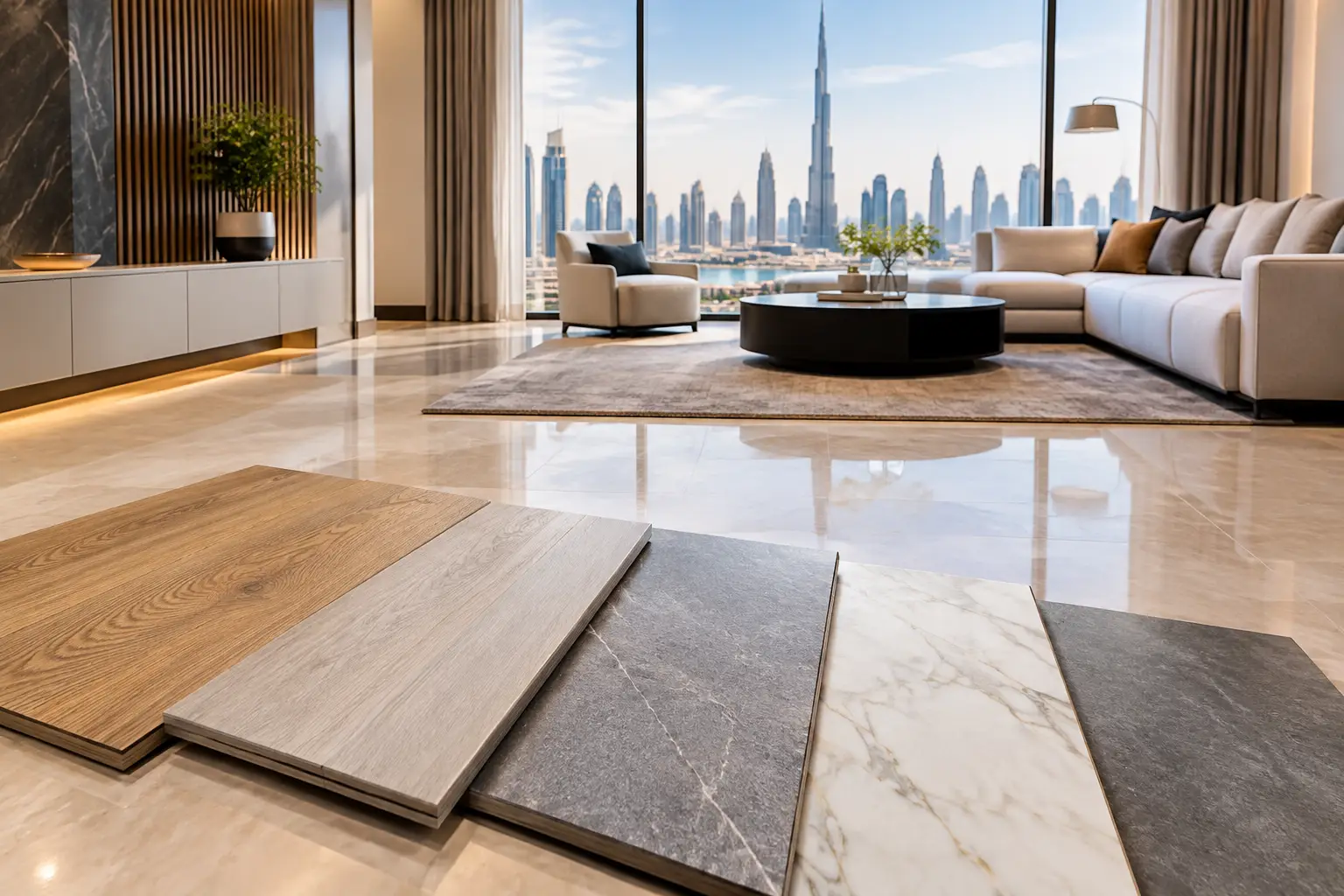
A floor is one of the few finishes that affects every room, every day. The right Dubai home flooring options must do more than suit the design concept. They need to perform well under strong sunlight, air conditioning, daily traffic, occasional moisture, and the practical demands of family life, guests, pets, or rental use.
For a villa or apartment renovation, flooring should be selected early rather than treated as a final decorative decision. Its thickness affects door clearances, skirting details, built-in joinery, bathroom levels, kitchen transitions, and the overall feeling of space. A well-planned floor creates continuity across the home. A poorly coordinated one can compromise even high-quality furniture and finishes.
Choosing Dubai Home Flooring Options by Room and Use
There is no single best flooring material for every property. A Palm Jumeirah villa with active outdoor living has different requirements from a Downtown apartment intended for premium leasing. The right specification depends on the room, the subfloor condition, expected foot traffic, maintenance preferences, and the design direction.
Porcelain tile remains one of the most dependable choices for main living areas, kitchens, corridors, and bathrooms. It is highly resistant to scratches, moisture, and staining, and it works particularly well where a continuous, low-maintenance finish is required. Large-format porcelain can make open-plan spaces feel calmer and more generous, especially when grout lines are carefully planned.
The trade-off is comfort. Tile can feel cooler and harder underfoot than timber-based materials, although this may be welcome in Dubai’s climate. The quality of installation matters greatly. Uneven substrates, poor leveling, or poorly aligned veins in marble-effect slabs will be visible long after handover.
Natural stone provides a more distinctive and enduring result. Marble, travertine, and limestone can bring depth that manufactured finishes cannot fully replicate. However, stone requires a more informed approach to sealing, cleaning, movement joints, and selection of suitable grades. It is not simply a tile upgrade. Each slab or piece has natural variation, and that variation should be reviewed as part of the design process.
Wood Flooring for Warmth and Character
Engineered wood flooring is often selected for bedrooms, formal living rooms, private lounges, and home offices. It introduces visual warmth and softens contemporary interiors with stone, glass, and painted joinery. A quality engineered board also offers greater dimensional stability than solid timber, making it better suited to conditioned interiors.
Not all wood finishes perform equally. Matte and brushed surfaces tend to disguise minor marks better than high-gloss finishes. Wider boards can look refined in larger rooms, but they need a level substrate and careful perimeter detailing. In areas near exterior doors or in homes with frequent wet cleaning, the specification should account for moisture exposure rather than relying on appearance alone.
Wood is best treated as a considered finish, not a universal material. It can be highly successful in dry spaces, while porcelain, stone, or a waterproof resilient floor may be more appropriate for kitchens, laundry areas, and bathrooms.
SPC and Luxury Vinyl for Practical Performance
SPC flooring and premium luxury vinyl are widely used where water resistance, acoustic comfort, and a timber-look finish are needed. They can suit bedrooms, apartment living areas, children’s rooms, rental properties, and certain commercial settings. Their layered construction makes them more forgiving underfoot than tile, and quality products can offer convincing wood and stone visuals.
The difference between a successful SPC installation and a disappointing one is often hidden below the surface. Existing floors must be assessed for flatness, moisture, cracks, and soundness. Installing over an uneven base can lead to movement, gaps, or clicking sounds. Underlay selection, expansion allowances, edge trims, and transitions to other materials should also be resolved before work begins.
For premium interiors, choose the plank dimensions, texture, and skirting strategy with care. A floor may be durable, but it should still sit naturally within the wider design scheme.
Bathrooms and Kitchens Need Their Own Specification
Wet areas should be planned around safety, drainage, and long-term water resistance. Porcelain tile is generally the strongest all-round choice for bathroom floors because it is durable and available in many slip-resistant finishes. Smaller tiles can improve grip and allow better falls toward drains, while larger tiles may create a cleaner visual effect in spacious bathrooms if drainage levels are properly designed.
A polished surface may look elegant in a showroom, but it is not always the right choice beside a shower or bathtub. Slip resistance, grout color, drain placement, and shower threshold detailing deserve the same attention as the tile itself. In a full bathroom renovation, waterproofing and substrate preparation are critical works that should be completed and tested before the final finish is installed.
Kitchens require flooring that can tolerate spills, dropped items, frequent cleaning, and heavy appliance movement. Porcelain is a natural fit, while engineered wood may be appropriate in open-plan layouts when a more residential look is the priority. The decision depends on how the kitchen will be used and whether continuity with adjoining living spaces outweighs the advantages of a more resilient surface.
The Details That Make Flooring Look Finished
Premium flooring is defined as much by its edges and junctions as by the material in the center of the room. Skirting, thresholds, stair nosing, door jambs, floor-to-wall shadow gaps, and transitions between tile and wood all affect the final result.
Large-format porcelain needs a layout plan before installation. This establishes where cuts will fall, how veins will continue between slabs, and whether central sightlines are balanced. In villas with broad entrances or long corridors, this planning prevents narrow, awkward cuts from becoming a permanent visual distraction.
For wood and SPC, the direction of the boards changes the perception of the room. Running planks toward a principal window or along the longest dimension can reinforce a sense of length. In connected rooms, the installer must also consider expansion requirements and whether uninterrupted continuity is technically appropriate.
Skirting is another decision that should not be left until the end. Matching skirting can create a unified result, while painted timber skirting may complement wall paneling and custom joinery. Flush skirting and shadow gaps offer a more architectural appearance but require precise coordination with plastering, wall finishes, and doors.
Subfloor Preparation Is Not Optional
Many flooring failures begin before the finish arrives on site. Existing tile may conceal hollow areas, uneven levels, moisture concerns, or previous patch repairs. Concrete slabs may require grinding, self-leveling compounds, crack treatment, or moisture testing before new flooring can be installed.
This is particularly relevant in renovation projects where new flooring must align with retained doors, wardrobes, kitchens, and marble thresholds. Adding a floor over an existing surface can affect finished levels and create problems at balconies, bathrooms, and internal doors. Removing the old material may provide a better long-term result, but the decision should follow a proper site assessment.
The same principle applies to underfloor heating, where applicable, and acoustic requirements in apartment buildings. The finished floor must be selected with the full build-up in mind, including adhesive, screed, underlay, waterproofing, and leveling layers.
How to Build a Cohesive Flooring Scheme
A home does not need one material everywhere. In fact, thoughtful changes in flooring can define different functions without relying on walls. A living and dining zone may use large porcelain slabs, bedrooms may shift to engineered wood, and bathrooms may use a coordinating textured tile. The key is to make transitions deliberate.
Limit the number of competing finishes. One principal floor, one warm secondary material, and a carefully selected wet-area tile often provide enough variety for a complete villa or apartment. Consider undertones as well: cool gray marble, yellow-toned oak, and cream tile can appear disconnected when placed together without a unifying palette.
Samples should be reviewed in the property, not only under showroom lighting. Daylight, window orientation, wall color, and the scale of the room can change how a finish reads. This is especially true for stone-look porcelain and timber, where the balance between warm and cool tones shapes the atmosphere of the whole interior.
Coordinating Flooring Within a Full Renovation
Flooring works best when coordinated with civil modifications, bathroom upgrades, kitchen installation, wardrobes, doors, curtains, and custom furniture. This avoids common site issues such as installing flooring before heavy works are complete, damaging finished surfaces during joinery installation, or discovering too late that a wardrobe needs a different floor level.
For full turnkey renovation projects, one accountable execution team can manage these interfaces from initial material selection through site preparation, installation, and final finishing. Time Furniture brings flooring, joinery, upholstery, curtains, and interior renovation works together so that the floor supports the complete interior rather than becoming a separate contractor package.
The most successful flooring choice is rarely the most dramatic sample on a display wall. It is the material that suits the property, is installed on a properly prepared base, and connects naturally with every finish around it for years to come.