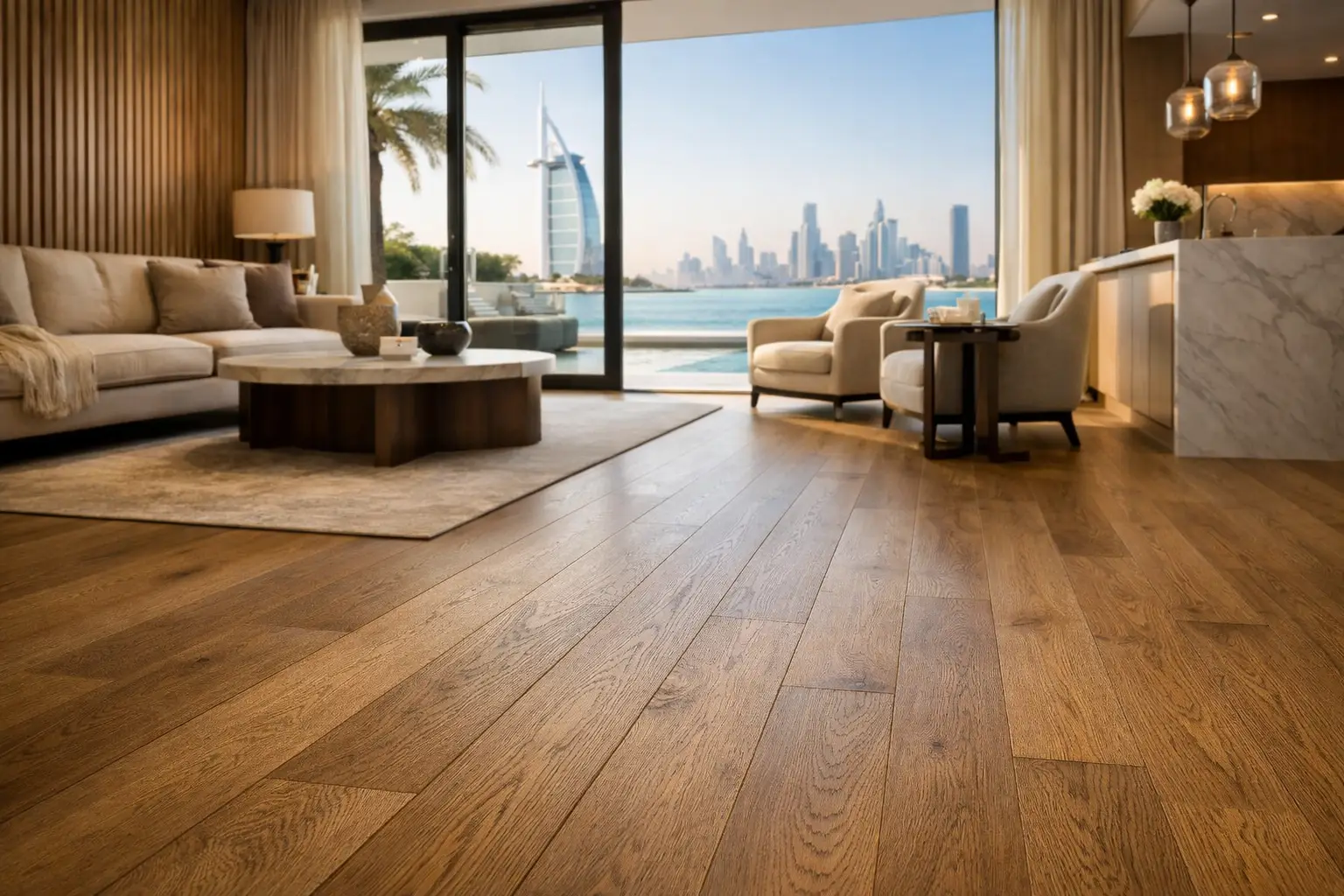
A floor can make a well-designed villa feel considered and complete, or expose every weakness in the renovation once the furniture is in place. This engineered wood flooring review looks beyond showroom samples to assess how the material performs in premium UAE homes, where air conditioning, sunlight, moisture control, subfloor condition, and installation quality all affect the final result.
Engineered wood is often selected for its warmth, natural grain, and more stable construction than solid timber. It can suit apartments, villas, bedrooms, living areas, corridors, and executive commercial spaces. However, it is not a universal solution. The right specification depends on the room, the expected traffic, the existing floor build-up, and how the renovation team manages the technical details beneath the boards.
What Engineered Wood Flooring Actually Is
Engineered wood flooring is a layered product. Its visible top layer, known as the wear layer, is real hardwood. Beneath it sits a multi-layer plywood or high-density core designed to provide dimensional stability. This construction gives the floor the authentic appearance and feel of timber while helping it cope better with seasonal changes than a traditional solid wood plank.
The quality range is significant. A premium board should have a properly balanced core, a credible hardwood wear layer, accurate machining at the tongue-and-groove or click joints, and a durable factory-applied finish. A thin veneer or poorly constructed core may look acceptable at first, but it is less forgiving during installation and more vulnerable to future movement, edge damage, and limited refinishing options.
For property owners, the first question should not be simply whether the floor is engineered wood. It should be which species, wear-layer thickness, core construction, plank dimensions, finish system, and installation method are appropriate for the property.
Engineered Wood Flooring Review: Strengths and Limitations
The main strength of engineered wood is that it delivers a genuine wood surface with greater structural stability. The boards are generally less prone to dramatic expansion and contraction than solid timber, particularly in air-conditioned interiors. This makes engineered wood a practical choice for many Dubai and Sharjah residences, provided the internal environment is reasonably controlled.
It also offers strong design flexibility. Wide planks can make a large living room feel calmer and more architectural, while herringbone and chevron patterns introduce detail without relying on heavy decorative finishes. Oak remains a popular choice because its grain accepts a wide range of stains, from pale natural tones to deeper smoked finishes. Walnut, ash, and other species can be equally effective when they support the overall interior concept.
The limitation is that engineered wood is still wood. It is not waterproof flooring, and it should not be treated like ceramic tile or luxury vinyl. Standing water, repeated leaks, wet mopping, and poor moisture management can cause staining, cupping, joint movement, or damage to the core. It is generally unsuitable for shower areas and should be specified carefully near wet kitchens, utility rooms, and entry points exposed to frequent water.
It can also show surface marks. A matte, brushed finish tends to conceal minor wear better than a high-gloss finish, but no real wood floor is completely immune to scratches from moving furniture, pet claws, dropped objects, or abrasive dirt. For many homeowners, this natural aging is part of the appeal. For a rental property or a household expecting exceptionally heavy use, the finish selection deserves close attention.
The Details That Separate a Premium Floor From an Average One
A flooring sample can be misleading because it does not reveal the conditions of the subfloor, the quality of the installation, or how the floor will look across an entire room. A proper assessment should focus on a few technical points before the material is approved.
Wear Layer and Refinishing Potential
The wear layer is the real hardwood surface that can be sanded and refinished in the future. A thicker wear layer gives more long-term flexibility, although refinishing should always be assessed by a flooring professional based on the condition of the floor and the manufacturer’s specification.
For a high-value residence, a substantial wear layer is typically a stronger choice than a decorative veneer. It supports the long-term value of the installation and allows the floor to be maintained rather than replaced prematurely after years of use.
Core Construction and Board Stability
The core has a direct effect on stability. Multi-ply plywood cores are commonly preferred for premium applications because they provide reliable support and handle changes in indoor conditions well. Board quality, joint precision, and backing layers also influence how cleanly the flooring installs and how it performs over time.
Very wide boards can look outstanding in villas and open-plan apartments, but wider planks demand better subfloor preparation and more disciplined moisture control. The visual decision must be matched by the technical capacity of the site.
Factory Finish and Surface Texture
A factory-finished board offers controlled application of oil, lacquer, or polyurethane-based protective coatings. The best option depends on the desired look and maintenance expectations. Oil-finished floors often provide a natural, tactile appearance and can allow localized repair, but they require a consistent care routine. Lacquered finishes offer stronger surface protection and are often easier for busy households to maintain.
Brushed, wire-brushed, and lightly textured surfaces are practical choices because they give the timber character and help disguise minor signs of everyday use. Smooth, highly polished floors create a more formal look but can make scratches and dust more visible in bright rooms.
Installation Is Where Most Flooring Problems Begin
Even an excellent engineered wood product can underperform if the installation process is rushed. The floor must be installed over a dry, level, structurally sound subfloor. Before work begins, the execution team should inspect floor levels, test moisture where required, identify cracks or weak areas, and confirm whether screeding, leveling compounds, vapor barriers, or acoustic underlays are needed.
In a renovation, floor height coordination is equally important. Engineered wood must align properly with stone, tile, carpet, joinery thresholds, doors, skirting, and built-in wardrobes. An overlooked height difference can lead to awkward transitions, door clearance issues, or visible finishing gaps. These details are easier to resolve when flooring, joinery, civil work, and finishing are coordinated under one project team.
The chosen installation method matters. Floating installation can be appropriate for certain systems and allows efficient fitting, while glue-down installation often provides a more solid underfoot feel and can be preferable for wide planks or patterned layouts. Neither approach is automatically better. The correct method depends on the board specification, subfloor condition, acoustic requirements, and intended use of the space.
Expansion gaps around walls and fixed elements are essential. Wood flooring needs room to respond to normal environmental changes. Those gaps should then be professionally concealed with skirting, trims, or carefully detailed joinery, not treated as an afterthought.
Is Engineered Wood Suitable for Dubai Homes?
Yes, engineered wood can perform very well in Dubai homes, but the conditions must be managed. Stable air conditioning, controlled indoor humidity, functioning windows and doors, and protection from direct water exposure all support a successful installation. In villas with large glazing, sun exposure should also be considered. Strong direct sunlight can alter the tone of natural wood over time, especially on lighter or more reactive species.
For apartment owners, acoustic performance may influence the flooring build-up. A suitable underlay or installation system can help reduce transmitted sound, subject to building requirements and the existing slab construction. For villa owners, the larger concern is often coordination across expansive rooms, staircases, transitions, and custom joinery.
Engineered wood is especially effective in bedrooms, lounges, formal living spaces, home offices, dressing rooms, and private corridors. It can be used in open-plan areas adjoining kitchens when the kitchen is designed and maintained to prevent water exposure. In bathrooms, shower zones, and other consistently wet areas, a different flooring material is the more dependable choice.
Care Expectations Before You Commit
A well-finished engineered wood floor does not demand complicated maintenance, but it does require sensible habits. Use soft protective pads under furniture, lift rather than drag heavy pieces, and place quality mats at entrances to reduce dust and grit. Spills should be wiped promptly with a soft cloth.
Routine cleaning should use a vacuum setting suitable for hard floors or a soft broom, followed by a lightly damp mop only when needed. Excess water and harsh cleaning products should be avoided. If the home includes pets, children, or frequent entertaining, select a finish and color that accept natural variation gracefully rather than expecting the floor to remain visually untouched.
For a premium renovation, engineered wood should be viewed as a long-term finish rather than a final decorative purchase. It needs the right board, the right site preparation, and the right installation team. Time Furniture coordinates flooring with civil works, joinery, furniture, and finishing details so the floor supports the full interior rather than becoming an isolated trade package.
The most useful decision is to review full-size samples in the actual space, assess the subfloor before selecting a plank, and choose a finish that suits the way the property will truly be lived in.