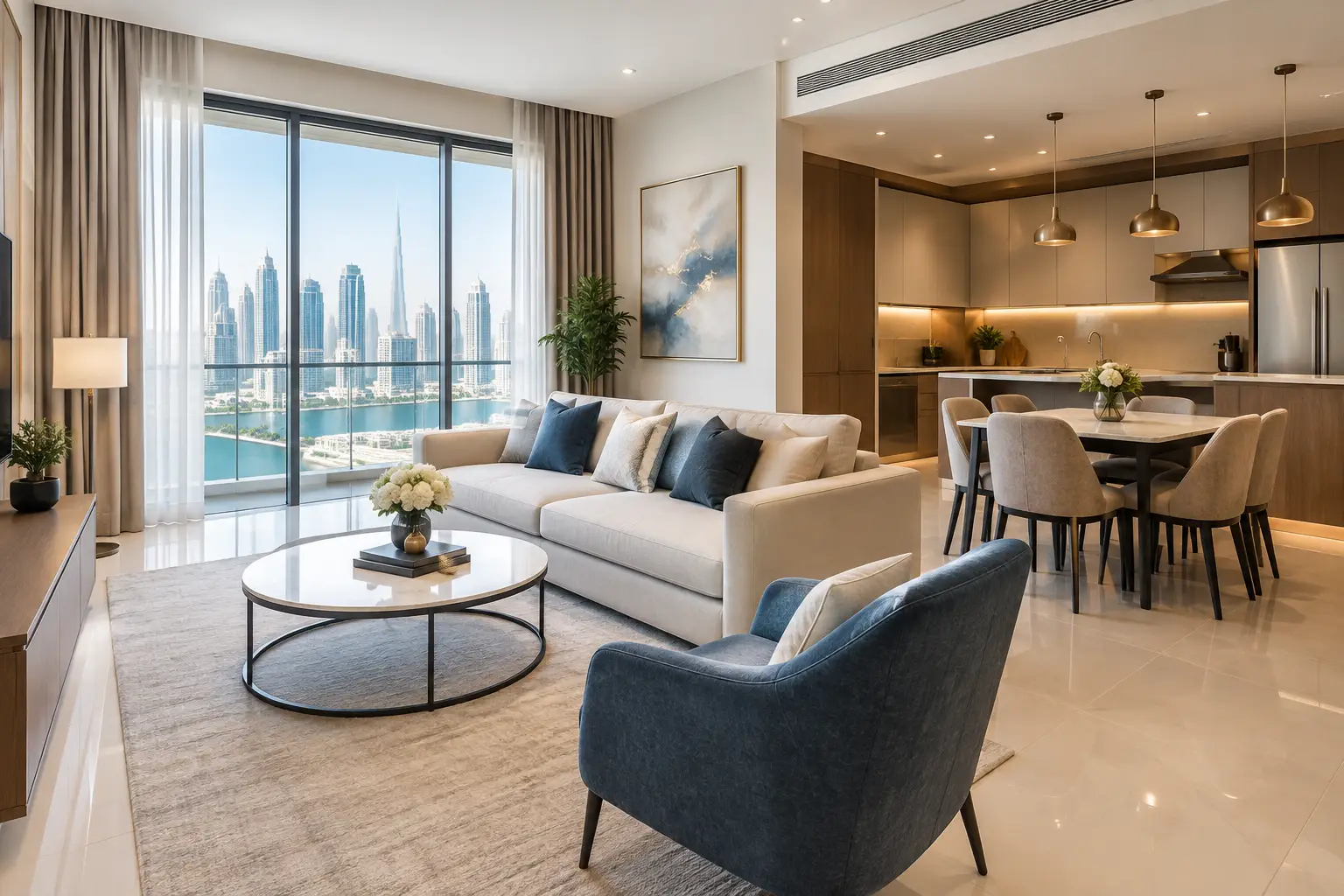
A rental apartment is judged quickly. Prospective tenants notice the living room proportions, storage capacity, curtain quality, lighting, and overall finish before they ask about the lease terms. Knowing how to furnish rental apartments is therefore not simply about filling rooms. It is about creating a well-executed home that photographs well, functions comfortably, and protects the owner’s asset over repeated tenancies.
For premium properties in Dubai and Sharjah, the strongest results come from a coordinated furnishing and fit-out plan. Furniture, flooring, joinery, window treatments, and finishing details should support one another rather than appear as separate purchases made over time. The goal is a residence that feels complete, durable, and easy for the right tenant to choose.
Start With the Tenant Profile and Rental Strategy
Before selecting a sofa or specifying wardrobes, define who the apartment is intended for. A one-bedroom in Dubai Marina may appeal to professionals seeking a polished turnkey residence. A larger apartment in Dubai Hills Estate, Downtown Dubai, or Aljada may suit families who prioritize storage, dining capacity, and practical bedroom layouts. A short-term rental requires different planning from a long-term lease, particularly in terms of furniture durability, housekeeping access, and the visual impact of each room.
This decision affects nearly every specification. A furnished apartment for a corporate tenant may benefit from a dedicated work area and a more restrained palette. A family-focused apartment needs hard-wearing upholstery, practical dining chairs, protected wall finishes, and generous concealed storage. Designing for everyone often creates an unfocused result. Designing for a clear occupant profile makes the property more compelling.
The furnishing level should also match the building, location, and expected rental position. In a premium community, undersized furniture, basic window coverings, or poorly matched finishes can reduce the perceived quality of an otherwise valuable property. Conversely, highly delicate materials may not be appropriate where frequent tenant turnover is expected. Good rental furnishing balances presentation with serviceability.
How to Furnish Rental Apartments With a Clear Layout
The floor plan should lead the project. Measure every room, wall return, window opening, door swing, electrical point, and air-conditioning grille before finalizing furniture sizes. In apartments, a few centimeters can determine whether a dining chair clears the wall, a wardrobe door opens correctly, or a bed layout remains comfortable.
Begin with the main circulation routes. Residents should be able to enter the apartment, move through the living area, access bedrooms, and use storage without navigating around furniture. Avoid placing large sofas where they restrict balcony access or make a compact living room feel crowded. A smaller, properly proportioned seating arrangement can create a more premium impression than an oversized piece that dominates the room.
In open-plan layouts, furniture should establish clear zones. A well-positioned rug and sofa arrangement can define the living area, while a dining table and pendant lighting create a separate dining identity. This helps the apartment feel organized and larger, particularly in photographs and viewings. Where space permits, a console, sideboard, or integrated shelving unit can add function without introducing visual clutter.
Bedrooms require equally careful planning. The bed should have comfortable access from both sides where the room allows, with properly scaled nightstands and reading lights. Built-in wardrobes should be assessed for internal organization, not only external appearance. Hanging space, drawers, adjustable shelves, and dedicated luggage storage can make a meaningful difference to daily use.
Use Custom Joinery Where It Solves a Real Problem
Custom joinery is especially valuable in rental apartments when it resolves awkward layouts or adds long-term utility. A made-to-measure TV wall can conceal cables, provide controlled storage, and give the living room a finished focal point. An entrance console can organize keys, shoes, and daily items without crowding the hallway. A fitted study unit can convert an unused corner into a productive workspace.
The key is restraint. Not every wall needs a built-in feature. Use joinery where standard furniture leaves wasted space, fails to meet storage needs, or compromises the visual order of the room. Well-designed custom work should look intentional and remain practical for different tenants.
Specify Materials for Occupancy, Not Just for Viewing
Rental properties experience regular use, moving activity, cleaning, and occasional repair needs. Material selection should account for this reality from the start. Upholstery needs to be attractive while remaining suitable for professional cleaning. Dining tables should resist everyday marks. Rugs should feel substantial but be manageable to maintain. Bed bases, side tables, and wardrobes should tolerate repeated use without loose fittings or unstable edges.
For flooring, the decision depends on the existing condition, building requirements, and tenant profile. Quality flooring can transform an apartment, but it must be appropriate for the subfloor, thresholds, moisture exposure, and acoustic expectations of the building. Similarly, wallpaper, wall panels, and decorative paint can elevate selected areas, but they should be installed with clean edge detailing and materials suitable for the property’s operational needs.
Curtains deserve more consideration than they often receive. Properly measured curtains improve privacy, light control, acoustics, and the perceived height of a room. In bedrooms, blackout lining is usually a practical choice. In living areas, layered treatments can provide daytime softness and nighttime privacy. Curtain tracks, brackets, and hems should be installed precisely, since poorly fitted window treatments can make even a well-furnished apartment appear unfinished.
A neutral foundation generally serves rental properties well, but neutral does not mean characterless. Warm wood tones, textured fabrics, considered lighting, and selected artwork can create a welcoming environment without making the apartment feel overly personal. The most effective schemes use a limited palette and repeat finishes across rooms for visual continuity.
Prioritize the Rooms That Influence Decisions
Not every room carries equal weight during a viewing. The entrance, living area, primary bedroom, kitchen, and bathrooms usually shape a tenant’s perception of the entire apartment. These spaces should receive the most attention in the scope and execution plan.
The entrance should feel organized from the first step inside. Good lighting, a clean wall finish, and a practical console or storage solution immediately signal care. In the living room, focus on comfort, proportion, lighting layers, and a strong focal point. A room with only ceiling lights can appear flat, while table lamps, floor lamps, or integrated joinery lighting create depth and a more residential atmosphere.
Kitchens and bathrooms may not always require full renovation, but visible wear should be addressed before furnishing begins. Cabinet alignment, countertops, handles, plumbing fixtures, silicone joints, mirrors, and lighting all affect the perceived standard of the apartment. A carefully furnished living room cannot fully compensate for a bathroom with tired finishing details.
Plan for Turnover and Ongoing Maintenance
A rental apartment should be designed for efficient handover between tenants. Keep a detailed schedule of furniture, finishes, appliances, curtain specifications, paint colors, and custom joinery details. This makes repairs, replacements, and future upgrades more controlled. It also avoids the common problem of trying to match an unrecorded fabric, laminate, or wall finish months later.
Choose components that can be serviced without dismantling the room. Removable cushion covers, accessible curtain tracks, replaceable hardware, and sensible cable management reduce disruption when maintenance is needed. Protect high-contact areas with durable finishes, particularly around dining zones, entry points, wardrobe doors, and bed headboards.
It is also wise to allow for a small reserve of matching paint, spare tiles where relevant, and approved hardware. These details are rarely glamorous, but they protect the quality of the property over time and help maintain a consistent standard after each tenancy.
Coordinate Furnishing With Fit-Out Execution
The greatest risk in furnishing a rental apartment is fragmented coordination. Flooring installed before final wardrobe dimensions, curtains measured before ceiling work is complete, or furniture delivered before wall finishes have cured can cause avoidable delays and damage. A coordinated program considers site works, joinery production, upholstery, lighting, curtains, and final styling in the right order.
For owners who value accountability, working with one experienced execution partner can simplify the process. Time Furniture brings renovation works, custom joinery, upholstery, curtains, flooring, and furniture execution together through in-house teams, allowing decisions to be checked against the actual site rather than managed across multiple suppliers.
A well-furnished rental apartment should feel ready for real life, not simply prepared for a viewing. When layout, materials, storage, and finishing are handled with discipline, the property becomes easier to present, easier to maintain, and more likely to attract tenants who appreciate a properly completed home.