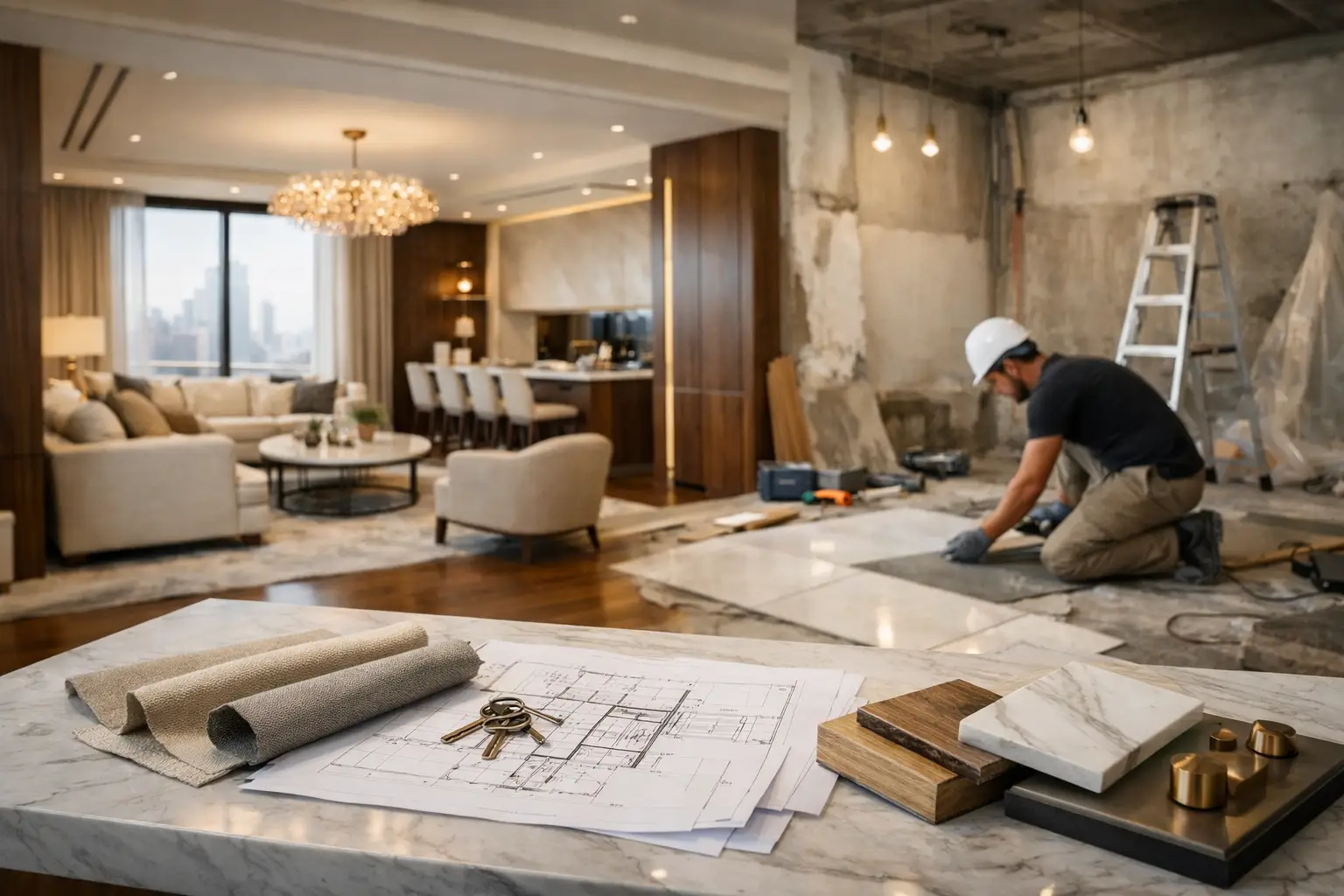
A luxury apartment renovation is won or lost in the details people do not immediately see: level flooring transitions, aligned shadow gaps, quiet door hardware, concealed services, and joinery that fits the room rather than simply filling it. Knowing how to renovate luxury apartment interiors means treating the project as a coordinated execution process, not a collection of separate upgrades.
For owners in premium Dubai and Sharjah developments, the objective is usually clear: create a home that feels more personal, more functional, and more refined while protecting the value of the property. Achieving that result requires early decisions, technical planning, and one accountable team to manage the work from site preparation through final styling.
Start With the Apartment’s Real Potential
Before selecting marble, paint colors, or furniture, assess what the apartment can realistically become. A luxury renovation should respond to the existing layout, ceiling height, natural light, views, building services, and community regulations. In a Downtown Dubai apartment, the view may determine where the living and dining zones sit. In a Palm Jumeirah residence, the priority may be creating better flow between the entrance, entertaining areas, and bedrooms.
A site survey should identify existing MEP conditions, including air-conditioning routes, electrical capacity, plumbing locations, and fire safety requirements. These practical constraints affect where a new kitchen island can be placed, whether a bathroom layout can change, and how much ceiling space is available for lighting and air-conditioning modifications.
It is also the right time to decide the scope. Some apartments need a complete turnkey fit-out with civil works, kitchens, bathrooms, flooring, ceilings, joinery, furniture, curtains, and upholstery. Others benefit more from a targeted upgrade, such as a redesigned master suite, a more efficient wardrobe, or bespoke wall paneling in the main living room. The right scope depends on the property, its current condition, and how the owner intends to use it.
How to Renovate a Luxury Apartment With a Clear Design Brief
Luxury is not created by adding more finishes to every surface. It comes from a controlled design language, high-quality materials, and consistency from room to room. A clear brief gives the project team a practical basis for design development and material selection.
Begin with how the apartment must work. Consider whether it is a primary home, a pied-a-terre, a rental investment, or a property being prepared for resale. A family residence may require generous closed storage, durable upholstery, and flexible study areas. An owner-occupied city apartment may place greater value on entertaining, a statement kitchen, and a hotel-quality primary bedroom.
The brief should define the preferred style without relying on vague labels alone. Rather than asking for a modern interior, specify the qualities that matter: warm timber tones, light natural stone, minimal visible hardware, layered lighting, bronze accents, or soft textured wall finishes. This gives designers, joinery teams, and site supervisors a shared standard for decision-making.
A strong brief also separates fixed work from movable pieces. Custom wardrobes, kitchens, bathroom vanities, wall panels, and integrated media units should be designed alongside the architecture. Sofas, beds, rugs, and loose furniture can then be selected or custom made to suit the completed shell. When these decisions are made in isolation, proportions often suffer.
Secure Approvals Before Site Work Begins
In apartment buildings, approval management is part of the renovation. Building management may require drawings, material details, contractor documentation, insurance records, work schedules, access arrangements, and deposits before any work starts. Certain modifications may also need review by relevant authorities, especially when they involve MEP systems, fire safety, or building services.
Do not treat approvals as an administrative task that can be handled after materials are ordered. They influence the sequence and duration of the project. Restrictions on working hours, elevator bookings, debris removal, and contractor access can affect delivery schedules and labor planning.
An experienced interior contractor will review these requirements early and build them into the program. This is particularly valuable in occupied towers, where clean site management, protected common areas, and controlled deliveries are essential to maintaining a professional process.
Plan the Technical Layer Before the Decorative Layer
The most polished interiors are supported by careful technical work. Electrical points must align with furniture layouts. Lighting should be designed around actual ceiling conditions. Plumbing must suit selected sanitaryware, and air-conditioning grilles should integrate cleanly with ceiling details and joinery.
Lighting deserves particular attention. A single central fixture rarely gives a luxury apartment the depth it needs. Use layers: ambient lighting for general illumination, task lighting where activities occur, and accent lighting for artwork, textured walls, display shelves, or architectural features. Dimming controls allow the same room to feel practical during the day and calm in the evening.
Storage planning is equally technical. A custom wardrobe should account for hanging lengths, drawers, accessories, luggage space, internal lighting, and access around doors. In compact apartments, carefully designed joinery can make the home feel larger by eliminating visual clutter and using overlooked areas efficiently.
Kitchen and bathroom upgrades need the same discipline. Material beauty matters, but so do cabinet construction, countertop support, ventilation, waterproofing, drainage falls, service access, and the alignment of tile joints. A bathroom may look impressive on handover day but fail to perform well if these fundamentals were not executed correctly.
Choose Materials for Performance as Well as Appearance
High-value finishes should be selected for how they age in the actual apartment. Natural stone offers character and depth, but it may require suitable sealing and maintenance. Timber veneer brings warmth, though the grain direction, edge treatment, and lighting conditions need careful consideration. Large-format porcelain can create a clean, continuous floor plane, but precise substrate preparation is necessary to avoid unevenness and poor joint alignment.
Material samples should be reviewed together, not one by one. A flooring sample may look excellent alone yet clash with the undertone of the wall paint, upholstery fabric, metal finish, or curtain fabric. Viewing samples under the apartment's natural and artificial light helps avoid expensive corrections later.
There is also a practical trade-off between highly delicate finishes and everyday use. A home with young children, pets, frequent guests, or a waterfront environment may need more resilient surfaces in certain areas. Premium execution is not about selecting the most fragile material. It is about selecting the right material and installing it to a high standard.
Use Custom Joinery to Create a Built-In Finish
Custom joinery is often what separates a well-furnished apartment from a fully resolved interior. It allows kitchens, wardrobes, vanities, wall panels, storage units, and media walls to follow the exact dimensions of the space. More importantly, it creates continuity between architectural elements and furnishings.
Quality depends on more than the visible finish. Internal carcass construction, edge banding, hardware selection, door alignment, ventilation, backing details, and installation accuracy all affect the final result. The same applies to upholstered pieces and curtains. Proper measurements, fabric handling, stitching, lining, and installation determine whether they look tailored or temporary.
Working with a contractor that manages joinery, upholstery, curtains, flooring, and site works under one roof reduces the gaps that often appear between separate vendors. At Time Furniture, this integrated approach allows the execution team to coordinate site dimensions, production details, delivery timing, and finishing work more closely.
Manage the Work in the Right Sequence
Apartment renovation requires a disciplined program. Demolition and protection come first, followed by civil modifications, MEP rough-ins, waterproofing where required, ceiling work, flooring preparation, and surface finishes. Joinery measurement and production should run in parallel once dimensions are confirmed, while final installation takes place after dusty work is complete.
Rushing the sequence can damage finished materials or create rework. For example, installing custom cabinetry before final ceiling or wall corrections may leave inconsistent gaps. Ordering curtains before window details are complete can produce inaccurate lengths. Installing delicate flooring too early exposes it to unnecessary site traffic.
A project manager should coordinate each trade, inspect work at key stages, and maintain a clear record of approved materials and changes. This becomes especially important when the owner is traveling or managing the project remotely. Consistent reporting and a single point of accountability make decisions faster and reduce uncertainty.
Inspect the Details Before Handover
The final inspection should be systematic, not a quick walk-through. Check paint consistency, tile alignment, silicone joints, drawer operation, door reveals, hardware, lighting scenes, appliance connections, flooring transitions, and curtain movement. Open every cabinet and test every fitting.
Small defects are more visible in a luxury interior because the eye is drawn to clean lines and close-fitting details. A careful snagging process gives the contractor an opportunity to correct issues before the apartment is occupied and ensures the handover reflects the intended standard.
A successful renovation should feel effortless once it is complete. That effect comes from detailed planning, capable workmanship, and coordinated execution behind the scenes. Choose a team that can manage those moving parts with care, and the apartment will feel considered not only on the first day, but through years of daily use.