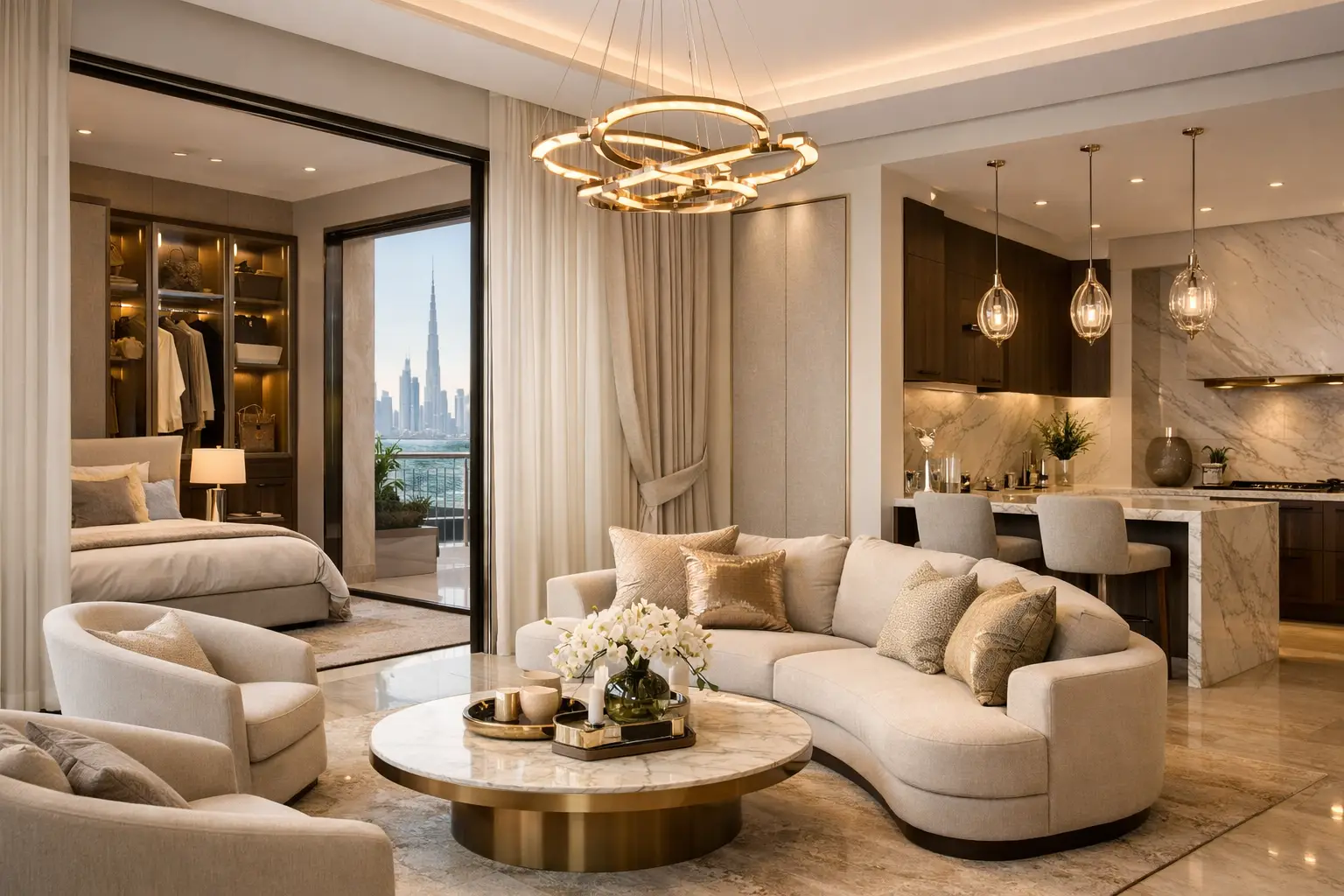
A luxury home in Dubai is no longer defined by a long list of expensive finishes. The most successful luxury interior trends Dubai homeowners are adopting feel considered, calm, and highly personal. They combine architectural clarity with custom craftsmanship, creating spaces that look refined in photographs but work just as well for daily family life, entertaining, and the demands of the local climate.
For a villa in Palm Jumeirah or Dubai Hills, the priority may be improving flow between large living areas and outdoor spaces. In a Downtown Dubai or Dubai Marina apartment, it may be making every wall and storage zone perform more effectively. In both cases, luxury comes from the standard of execution: aligned details, carefully selected materials, and one coordinated plan from civil works through final styling.
Luxury Interior Trends Dubai Properties Are Embracing
Quiet luxury with depth, not emptiness
Neutral interiors remain popular, but flat all-beige rooms are giving way to warmer and more layered schemes. Stone tones, mushroom, tobacco, soft gray, sand, muted olive, and deep brown bring a composed look without making a home feel cold. The aim is not a blank interior. It is a restrained backdrop with enough contrast in texture, tone, and form to hold attention.
Natural stone, timber veneer, fluted surfaces, brushed metals, bouclé upholstery, linen-blend curtains, and textured wallcoverings are often used together. Each material needs to be balanced. Too many statement surfaces can make a space feel busy, while too few can leave an otherwise premium renovation looking unfinished.
This approach works particularly well in open-plan villas and apartments because it gives connected areas a common visual language. A darker timber joinery detail in the entrance, for example, can reappear in the TV wall, kitchen island, or wardrobe interiors without becoming repetitive.
Bespoke joinery as the organizing feature
Custom joinery is becoming central to high-value interior renovation. Rather than treating wardrobes, media units, wall panels, and storage as separate purchases, homeowners are using them to shape the architecture of a room.
A full-height TV wall can conceal wiring, integrate display niches, improve storage, and establish a focal point in one coordinated installation. In bedrooms, tailored wardrobes and walk-in closets provide better capacity while maintaining clean proportions. In entry areas, concealed shoe storage, benches, mirrors, and paneling can make the first impression more deliberate.
The quality is in the details that are easy to overlook at the design stage: consistent shadow gaps, accurate door alignment, edge finishing, internal lighting, usable shelf depths, and hardware that supports the weight and frequency of use. A beautifully drawn unit will not feel luxurious if doors sit unevenly or access panels are poorly planned.
Statement stone used with purpose
Large-format porcelain, natural marble, quartz, and sintered stone continue to feature strongly in Dubai interiors. The change is in how they are used. Instead of covering every available surface, homeowners are placing stone where it has architectural impact: a fireplace wall, a kitchen island, a vanity backdrop, a dining niche, or a sculptural coffee table.
Book-matched marble can create a dramatic result, but it requires careful slab selection, vein planning, cutting, and installation. Porcelain can be a practical alternative for some high-use areas, offering a broad range of finishes with easier maintenance. The right choice depends on the location, expected wear, moisture exposure, and the overall design direction.
A premium finish is not simply about choosing the most dramatic slab. It is about ensuring transitions between stone, metal, wood, and paint are clean and intentional.
Softer Rooms With Stronger Function
Luxury interiors are becoming more comfortable and more practical at the same time. Formal rooms still have a place in larger villas, but they are often designed to be used rather than preserved. Curved sofas, deeper seating, rounded occasional chairs, upholstered wall panels, and softer lighting make larger rooms more inviting.
Custom upholstery is valuable here because standard furniture dimensions do not always suit a room's scale. A sofa can be made to fit a specific wall, maintain clear circulation, and complement the height of nearby joinery. Fabric selection also matters in homes with children, pets, frequent guests, or strong daylight. Appearance is only one part of the specification.
Layered lighting replaces a single decorative fixture
A chandelier can still provide a focal point, especially over a dining table or in a double-height entrance. But it should not be the only lighting decision. Current premium interiors use layers: architectural lighting for general illumination, task lighting where activities take place, and accent lighting to reveal texture, art, shelving, or a feature wall.
Cove lighting, recessed spotlights, concealed LED channels, bedside lighting, wardrobe illumination, and integrated joinery lighting can create a more controlled atmosphere. The key is to plan lighting before ceilings, joinery, and electrical points are finalized. Retrofitting it later may lead to visible compromises and unnecessary site disruption.
Dimming and scene control are worth considering in entertaining areas, bedrooms, and media rooms. They are not essential in every room, but where they are used thoughtfully, they allow one space to shift from daytime function to evening atmosphere without adding visual clutter.
Bathrooms with a hotel-level sense of calm
Bathroom upgrades increasingly prioritize a spa-like experience, but practical detailing remains the foundation. Large-format wall finishes, floating vanities, recessed niches, framed shower screens, integrated mirrors, and concealed storage create a clean visual effect while improving everyday use.
Waterproofing, floor falls, drainage positions, access for maintenance, and material compatibility are just as important as tile selection. A bathroom is one of the least forgiving areas in a renovation. Strong execution behind the finished surface protects the appearance and long-term performance of the room.
What Makes a Trend Last Beyond One Season
Not every popular look should be adopted in full. A highly distinctive wallpaper, a bold colored stone, or a sculptural lighting piece can be effective, but it is best used where it can be appreciated without controlling the entire home. Powder rooms, formal lounges, entrance spaces, and feature niches are often suitable places for a stronger design gesture.
For the main living room, kitchen, primary bedroom, and major flooring areas, a more timeless base usually offers better value. It allows furniture, artwork, rugs, and accessories to evolve over time while the permanent work remains relevant. This matters for homeowners planning to stay in the property and for investors preparing a premium property for rental or resale.
There is also a difference between a design trend and a construction decision. Loose furniture and decorative lighting can be changed relatively easily. Kitchen layouts, bathroom plumbing, custom wardrobes, flooring levels, wall paneling, and curtain pockets require more planning because they affect multiple trades.
Why Full-Scope Execution Matters
Luxury results are rarely achieved by choosing individual premium items from separate suppliers. The difficult part is coordination. Ceiling details must align with curtain tracks and lighting. Flooring must meet wall paneling at the right level. Kitchen appliances must be confirmed before cabinetry is manufactured. Upholstery, curtains, carpets, and furniture need to complement the fixed finishes rather than compete with them.
A turnkey interior execution partner helps manage these dependencies under one scope. This is especially valuable during villa renovation, where civil changes, electrical works, joinery, flooring, bathrooms, kitchens, and furnishing elements may overlap. Clear sequencing reduces rework, protects finished surfaces, and gives the homeowner a more accountable project structure.
Time Furniture brings this approach together through in-house joinery, upholstery, curtains, custom furniture, flooring, and finishing capability alongside renovation and fit-out execution. For clients, the benefit is not simply convenience. It is greater control over quality, material coordination, and the final level of detail.
Start With the Home You Actually Use
The strongest luxury interiors do not follow a showroom formula. They respond to how the property is occupied, what needs to be stored, where people gather, how daylight enters the rooms, and which finishes can be maintained comfortably over time. Before selecting a surface or a sofa profile, define the practical decisions that will shape the whole project.
A well-planned renovation gives trends their proper role: not as decoration for its own sake, but as a way to create a home that feels current, tailored, and confidently built for the years ahead.