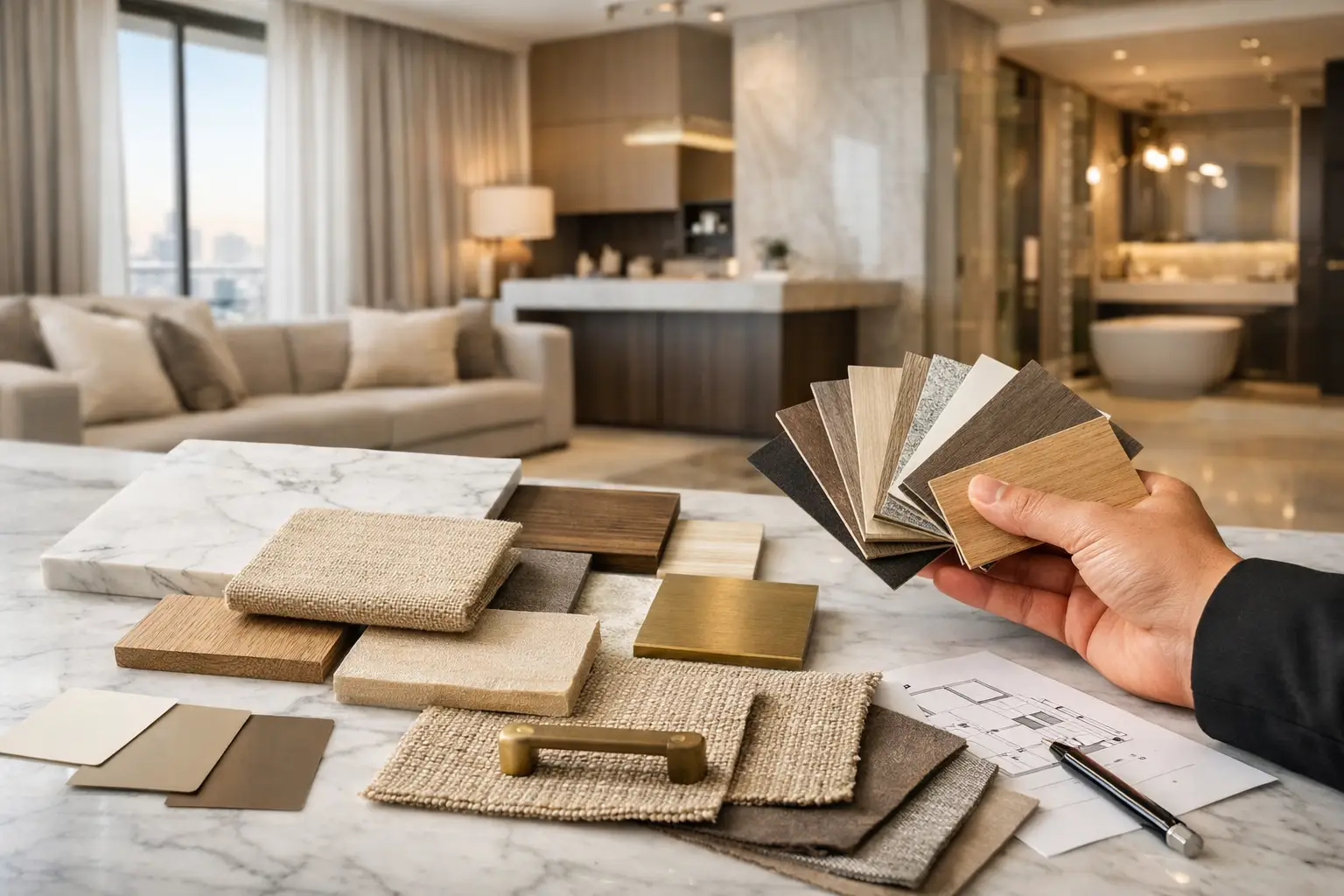
A beautiful render can make every finish look compatible. The real test begins when natural light hits the wall, cabinet doors open beside flooring, water reaches the bathroom, and the home is used every day. Renovation finish selection is the process of making those materials work together technically as well as visually. For villa and apartment owners, it is often the difference between an interior that feels considered for years and one that begins to show inconsistencies soon after handover.
Finishes include far more than paint colors. They cover flooring, wall treatments, veneers, stone, tiles, sanitaryware, metalwork, countertops, cabinet hardware, fabrics, and window treatments. Each one has a visual role, but it also has a maintenance requirement, an installation method, and a relationship with the trades that come before and after it.
Start Renovation Finish Selection With How You Live
The right finish is not necessarily the most delicate or the most dramatic sample in a showroom. It should suit the way the property will be occupied. A family villa with active children, pets, and frequent guests needs different flooring, upholstery, and wall finishes than a furnished apartment intended for executive rental. A waterfront apartment may also require closer attention to humidity, sunlight, and corrosion resistance around balcony-facing spaces.
Begin by identifying the demands of each room. Entrance areas and corridors need surfaces that tolerate frequent cleaning and foot traffic. Kitchens require heat, stain, and moisture resistance. Bathrooms need materials selected as a complete system, including tile, grout, waterproofing, sealant, drainage falls, and ventilation. Bedrooms allow more comfort-led decisions, such as softer textiles, warmer timber tones, and layered lighting.
This is where a practical interior contractor adds value. Instead of selecting surfaces in isolation, the execution team can assess where they will be installed, what substrate is required, how edges will be finished, and whether the chosen material is appropriate for the intended use.
Build a Clear Material Hierarchy
Premium interiors generally feel calm because the material palette has discipline. That does not mean every room should look the same. It means there is a clear hierarchy between primary finishes, supporting finishes, and smaller accents.
A primary finish may be the floor running through the living areas, the main timber veneer used in joinery, or the stone chosen for a kitchen island. These surfaces carry the strongest visual weight and should be selected first. Supporting finishes, such as wall paint, secondary tiles, cabinet interiors, and curtains, should reinforce rather than compete with them. Accent finishes can then bring contrast through brushed metal, textured wallpaper, fluted panels, decorative lighting, or a feature fabric.
The most reliable approach is to limit major competing patterns. A heavily veined countertop, patterned floor tile, and bold wallpaper can all be attractive individually, but together they may create visual noise. When one finish has movement, adjacent surfaces often benefit from a quieter texture or tone.
Color temperature deserves the same attention. Warm oak, cream stone, brass hardware, and warm-white lighting can work naturally together. Cool gray flooring, blue-veined marble, chrome fittings, and crisp-white lighting create a different language. Mixing warm and cool finishes is possible, but it should be intentional and tested under the actual lighting planned for the room.
Judge Samples in the Property, Not Only in the Showroom
Lighting changes finishes significantly. A paint color that appears soft in a showroom may look much darker in a Dubai apartment with limited daylight, while a stone slab that feels cool indoors may become bright and reflective beside large windows. Gloss surfaces can also reveal more reflections, fingerprints, and unevenness than expected.
Review full-size samples wherever possible. Place flooring beside joinery samples, countertop pieces, paint cards, and fabric swatches. View them in morning light, evening light, and under the proposed artificial lighting. For statement materials such as marble, natural wood veneer, and large-format porcelain, approve the actual slab, batch, or panel range rather than relying only on a small sample.
Natural materials come with variation. This is part of their character, but it must be managed. Stone can vary in veining and shade, timber veneers can shift in grain and tone, and handmade tiles may have irregularities. A professional finish approval process confirms what is acceptable before fabrication and installation begin.
Balance Appearance With Performance
Every finish involves a trade-off. High-gloss lacquer creates a refined, reflective cabinet face, but it may show marks more readily than a textured matte surface. Natural marble has depth and distinction, but it requires appropriate sealing and considered maintenance. Timber flooring adds warmth, while porcelain can be more forgiving in areas with heavy traffic or regular moisture exposure.
The goal is not to avoid materials that require care. It is to place them wisely and ensure the client understands their characteristics. A statement stone vanity may be an excellent choice in a guest bathroom used occasionally. The same finish may need more careful consideration on a heavily used kitchen countertop.
In the UAE, climate and air-conditioning also affect decisions. Window-facing fabrics should be assessed for fading resistance. Veneers, laminates, and solid timber details must be fabricated and installed with proper allowances, substrates, and site conditions. Metal finishes in humid or coastal settings should be selected for durability, not only appearance. These technical details are rarely visible at handover, but they strongly influence how the interior ages.
Coordinate Finishes With the Construction Sequence
A finish specification can be excellent on paper and still fail if site sequencing is poor. Flooring can be scratched by later works. Wallpaper can be damaged by incomplete electrical adjustments. Joinery may not sit correctly if wall levels, floor buildup, or tile thicknesses were not coordinated in advance.
Finish selection should therefore happen alongside technical planning. Before work begins, the team should confirm finished floor levels, tile layouts, skirting profiles, door clearances, ceiling details, shadow gaps, countertop heights, plumbing points, and appliance requirements. A few millimeters can affect the alignment between cabinetry, wall panels, and stone surfaces.
Bathrooms are a particularly important example. Tile selection cannot be separated from waterproofing, niche dimensions, drain placement, glass partition details, and the direction of falls. Large-format tiles can create a clean, contemporary appearance, but they require accurate setting out and careful cutting around corners, fixtures, and drains. The result depends as much on installation planning as on the tile itself.
For custom joinery, finish coordination extends to edge banding, grain direction, handle positions, internal fittings, lighting channels, and the junction between cabinets and walls. A wardrobe may use the same exterior veneer as a bedroom wall panel, but the internal material should be selected for durability, visibility, and ease of cleaning. These are decisions best resolved before production starts.
Do Not Treat Hardware and Detailing as Afterthoughts
Fine finishes are often defined by the elements people touch. Cabinet pulls, hinges, door handles, curtain tracks, switches, sockets, faucets, and trim profiles should feel consistent with the wider interior. Their finish should also be specified precisely. “Gold” can range from polished brass to muted champagne, antique bronze, brushed brass, or PVD-coated metal, each with a different appearance and maintenance profile.
Small junctions matter as much as major surfaces. Consider how a wall panel meets a skirting board, where tile terminates at a painted wall, whether a stone edge needs a subtle radius, and how curtains stack when fully open. These details are where a premium renovation either looks resolved or looks assembled from separate selections.
Mock-ups are valuable for complex areas. A sample section of paneling, a bathroom tile layout, or a kitchen cabinet and countertop junction can reveal issues early, when adjustments are still practical. This is especially useful for high-value materials and custom-made components.
Create a Finish Schedule Before Ordering
A finish schedule is the working document that turns design intent into coordinated execution. It should identify each material, its supplier or approved sample, location, size, color, finish, installation direction, edge detail, and any maintenance requirement. It should also record approved alternates where lead times or stock availability may affect the program.
Without this level of clarity, substitutions can happen late and cause unwanted differences between rooms or trades. A schedule gives the client, designer, project manager, joinery workshop, and installation team one shared reference point. It is particularly useful when a renovation includes custom furniture, curtains, flooring, wall finishes, and multiple wet areas under one scope.
Time Furniture approaches finish coordination as part of complete interior execution, bringing site works, joinery, upholstery, flooring, curtains, and finishing details into one accountable process. This reduces the risk of each supplier making decisions independently of the overall interior.
The best final selections are not simply the ones that photograph well on installation day. They are the materials that suit the property, meet the demands of daily use, and are installed with enough care that every transition feels intentional.