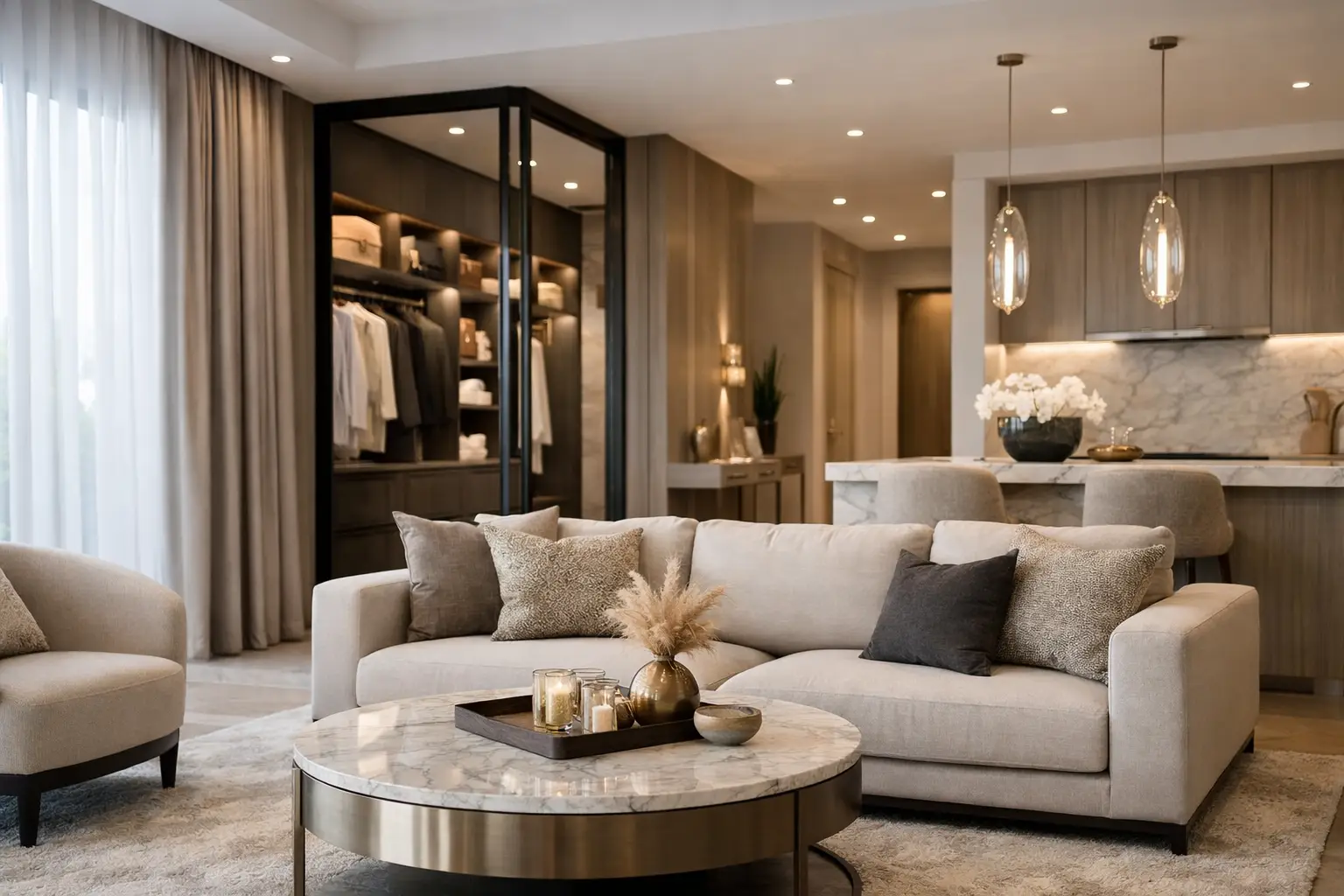
A successful Sharjah villa interior upgrade is rarely about replacing a few visible finishes. It is about correcting how the home works: improving storage, updating aging services, refining room proportions, and creating a consistent standard of finishing from the entrance to the private bedrooms. For villa owners, the strongest results come from treating the project as one coordinated interior execution scope rather than a collection of separate purchases and contractors.
Many villas have generous square footage but underused rooms, dated kitchens, insufficient wardrobes, poorly planned lighting, or finishes that no longer reflect the quality of the property. An upgrade should preserve what is worth keeping while making practical, lasting improvements where they matter most.
Start with How the Villa Is Used
Before selecting materials or approving furniture drawings, establish how the household uses each space. A formal majlis may require a different seating layout, acoustic treatment, and curtain strategy than a family living room. A large master suite may need a walk-in closet with better internal organization rather than additional freestanding furniture. A guest bedroom may be more valuable as a flexible study and sleeping space.
This early planning stage prevents a common renovation problem: attractive rooms that do not support daily living. Consider traffic flow between the entrance, living areas, dining room, kitchen, and outdoor spaces. Identify where clutter accumulates, where privacy is needed, and which rooms receive the most use. The answers guide decisions on joinery, lighting, furniture scale, flooring transitions, and wall treatments.
For landlords and investors, the same exercise should focus on market expectations. A premium rental or resale villa benefits from durable finishes, organized storage, well-designed kitchens and bathrooms, and a coherent interior language that photographs well without becoming overly personal.
Build the Scope Before Ordering Finishes
A villa renovation runs more smoothly when the execution scope is defined before decorative selections take over. Site conditions, ceiling levels, electrical points, plumbing routes, air-conditioning requirements, and existing flooring all affect the final design. Changing these elements after joinery production or flooring installation has started can affect both the schedule and the quality of the finished work.
A proper scope typically considers civil modifications, demolition where required, electrical and plumbing adjustments, false ceilings, wall preparation, painting, flooring, bathroom renovation, kitchen work, custom wardrobes, curtains, upholstery, and furniture. Not every villa needs every category, but the dependencies between them should be clear.
For example, a new TV wall may involve electrical relocation, data points, wall paneling, concealed lighting, and custom cabinetry. A kitchen upgrade may require appliance dimensions, countertop decisions, plumbing coordination, ventilation planning, and cabinet drawings before fabrication begins. Managing these as isolated tasks often creates gaps between trades. Managing them together creates cleaner junctions and clearer accountability.
Prioritize the Rooms That Change Daily Life
Kitchen and Family Living Areas
The kitchen and adjacent family areas often deliver the most meaningful improvement because they support everyday routines. A kitchen upgrade should be assessed beyond cabinet door style. Storage capacity, worktop depth, appliance placement, pantry access, lighting, backsplash detailing, and hardware quality all affect how the space performs over time.
In open-plan villas, the kitchen must also relate visually to the family room and dining area. Custom joinery can create that connection through matching finishes, display units, integrated storage, or a carefully designed island. The goal is not to make every room identical. It is to create continuity without losing the function of each space.
Bedrooms, Wardrobes, and Walk-In Closets
Bedrooms benefit from quieter, more disciplined design decisions. Upholstered headboards, wall paneling, bedside joinery, layered curtains, and appropriately scaled lighting can improve comfort without overcrowding the room. The wardrobe or walk-in closet is equally important. Internal drawer configurations, hanging sections, accessory storage, integrated mirrors, and practical lighting make a daily difference that is often missed in a purely decorative renovation.
Custom wardrobes are especially useful in villas with awkward recesses, unusual ceiling heights, or existing rooms that need better storage without sacrificing floor area. Measured joinery allows the design to respond to the actual site rather than forcing the room around standard dimensions.
Bathrooms and Guest Areas
Bathroom upgrades require technical discipline as well as finish selection. Waterproofing, drainage falls, plumbing locations, tile alignment, shower detailing, vanity proportions, and ventilation should all be handled carefully. Premium fixtures alone cannot compensate for poor preparation behind the walls.
Guest bedrooms, powder rooms, and entrance areas may be used less frequently, but they strongly shape how the villa is experienced. These spaces are ideal for precise finishing details such as wallcoverings, decorative mirrors, statement lighting, tailored curtains, and custom console units, provided they remain consistent with the wider interior scheme.
Choose Materials for Performance, Not Just Appearance
A polished sample board is useful, but materials must be selected for the conditions of the specific room. Flooring near entrances and family areas needs to tolerate frequent use. Upholstery should suit the household and intended level of maintenance. Kitchen surfaces need to accommodate heat, cleaning, and daily preparation. Curtains must balance privacy, daylight control, and the scale of the windows.
In Sharjah villas, sunlight is a major consideration. Strong natural light can alter how paint colors, wood tones, fabrics, and wallcoverings appear at different times of day. It can also affect fabric longevity and glare in living spaces. Reviewing samples on site, rather than only in a showroom, helps avoid unexpected results.
The same principle applies to paint and lighting. A warm wall color may feel welcoming under evening lighting but look entirely different in a bright, double-height space. Lighting should be planned in layers: general illumination for movement, task lighting for practical use, and accent lighting for architectural features, artwork, or joinery. Too many downlights can make a villa feel flat; too little functional lighting can make an otherwise refined interior inconvenient.
Why One Coordinated Execution Team Matters
Villa upgrades involve several specialized trades, and the quality of their coordination is visible in the final result. Flooring must meet skirting cleanly. Wall panels must align with electrical points. Curtains need to work with ceiling pockets and window proportions. Cabinet doors, countertops, appliances, and backsplash details need precise tolerances.
When renovation, joinery, upholstery, curtains, furniture, and finishing works are coordinated through one experienced team, decisions can be made with the complete project in view. This reduces the risk of site work being completed without allowing for later custom elements. It also makes responsibility clearer when adjustments are required.
Time Furniture brings this approach together through in-house execution capabilities covering renovation, custom joinery, upholstery, curtains, flooring, furniture, and finishing details. For villa owners, this means fewer handoffs between separate vendors and greater control over workmanship from site preparation through final installation.
Set a Realistic Sequence for a Sharjah Villa Interior Upgrade
The order of work matters as much as the materials selected. Design development and site measurement should come first, followed by approvals, technical coordination, and material confirmation. Demolition and civil works generally need to be completed before ceilings, electrical changes, plumbing adjustments, flooring, and final wall finishes. Joinery fabrication can proceed once drawings and site conditions are confirmed, then installation is timed around the readiness of each room.
Some decisions cannot wait. Final appliance specifications affect kitchen cabinetry. Curtain pocket dimensions affect ceiling work. Door and wardrobe designs affect electrical switches and wall treatment layouts. A professional execution plan identifies these decisions early, while there is still time to make changes without disrupting completed work.
Schedule expectations should remain practical. The size of the villa, the extent of civil changes, custom manufacturing requirements, material lead times, and approval speed all influence the program. Fast work is valuable only when it does not compromise preparation, alignment, curing time, or quality checks.
Inspect the Details Before Handover
The final stage should include a structured inspection rather than a quick walk-through. Check paint consistency, tile lines, silicone finishes, cabinet alignment, drawer operation, door gaps, curtain movement, upholstery condition, lighting controls, and transitions between different finishes. Small corrections at this stage protect the standard of the entire project.
A well-executed villa upgrade should feel considered rather than newly assembled. The storage should work intuitively, the rooms should connect naturally, and the finishing should hold up to close inspection. Begin with a clear brief, appoint a team that can manage the full scope, and give the technical details the attention they deserve. That is how an upgraded villa continues to feel valuable long after the final installation.