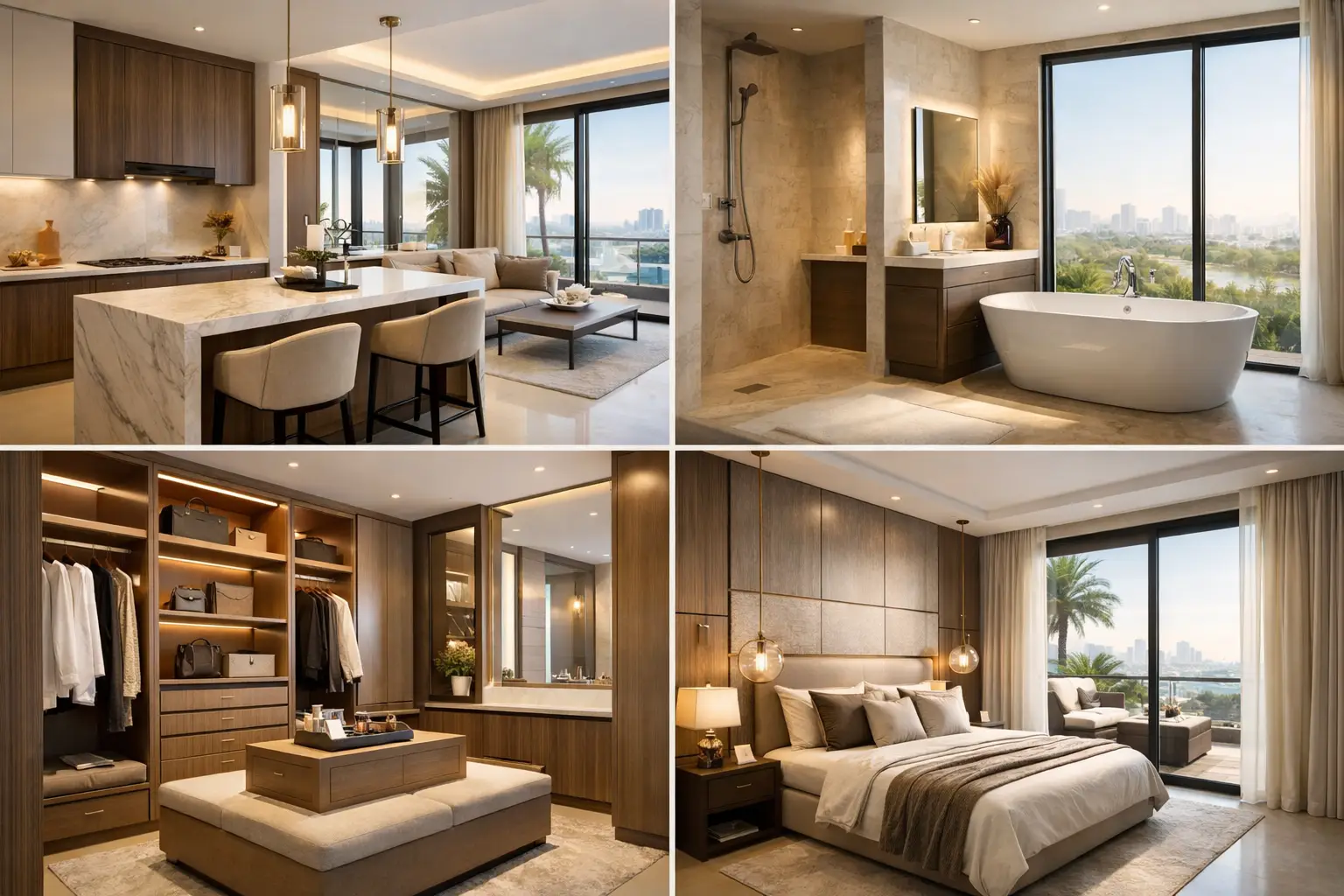
A well-located rental property can still underperform when its interiors feel dated, poorly planned, or difficult to maintain. The top rental property upgrades are not simply decorative changes. They improve how a home functions every day, strengthen first impressions during viewings, and help protect the condition and long-term value of the asset.
For premium apartments and villas in Dubai and Sharjah, tenants often compare several properties within the same community. The difference may come down to a more practical kitchen, better wardrobe storage, refined lighting, or a bathroom that feels properly finished. The objective is to create an interior that looks considered, performs reliably, and remains easy to maintain between tenancies.
Top Rental Property Upgrades Worth Prioritizing
1. Upgrade kitchens for daily usability
The kitchen has a major influence on rental appeal because it is one of the most frequently used spaces in the home. A kitchen does not always require a complete redesign, but worn cabinet doors, damaged countertops, outdated hardware, poor lighting, and inefficient storage can make an otherwise strong property feel neglected.
A focused kitchen renovation can include new custom cabinetry, durable countertop materials, improved drawer systems, integrated appliance provisions, a coordinated backsplash, and under-cabinet lighting. For larger villas or higher-value apartments, a full layout review may be worthwhile, particularly where the existing kitchen lacks preparation space, storage, or a clear circulation route.
Material selection matters. High-gloss surfaces may look striking initially but can show fingerprints and scratches more easily in a rental setting. Durable laminate, quality veneer finishes, solid hardware, and practical worktops often provide a better balance of appearance and serviceability. The right choice depends on the property’s positioning, expected tenant profile, and how intensively the space will be used.
2. Renovate bathrooms with durability in mind
Bathrooms are judged quickly during a viewing. Stained grout, tired sanitaryware, weak ventilation, leaking fixtures, or mismatched finishes can create an immediate concern about maintenance. A properly executed bathroom upgrade gives tenants confidence that the property has been cared for.
The strongest improvements usually combine waterproofing, modern sanitaryware, well-proportioned vanity storage, quality mixers, shower screens, mirrors, and layered lighting. Large-format tiles can reduce visible grout lines, while recessed niches and practical vanity drawers make the room easier to use. Good extraction and correct fall toward floor drains are less visible but equally important technical details.
Avoid selecting finishes based only on showroom appearance. Highly textured surfaces, delicate stone, or fittings with difficult-to-source replacement parts may increase maintenance requirements. For a rental property, the finish should look premium while standing up to regular cleaning and normal tenant use.
3. Add custom wardrobes and organized storage
Storage is one of the most valuable upgrades in apartments, townhouses, and villas. Tenants may accept a smaller bedroom more readily when it includes a well-designed wardrobe with hanging space, drawers, shelves, and sensible internal organization. Poor storage, on the other hand, makes a property feel smaller and less functional.
Custom wardrobes allow the available wall width, ceiling height, and room layout to be used properly. In premium properties, this can include full-height wardrobes, integrated dressing areas, walk-in closets, concealed laundry storage, or tailored entry cabinets. A clean exterior finish paired with a durable interior configuration helps the space look refined without becoming difficult to maintain.
This upgrade is especially relevant when the property will be rented unfurnished or semi-furnished. Built-in storage gives tenants a stronger reason to choose the home and can reduce the need for additional freestanding pieces that interrupt the layout.
4. Improve flooring before it becomes a distraction
Flooring establishes the visual standard of the entire property. Scratched laminate, damaged tiles, uneven transitions, loose skirting, or inconsistent floor finishes between rooms can make a home appear older than it is. Replacing or refinishing flooring can dramatically improve the perceived quality of a rental property, particularly in living areas, bedrooms, corridors, and master suites.
The best flooring solution depends on the existing substrate, building requirements, moisture exposure, and the target market. Porcelain tile remains a practical option for many UAE properties because of its durability and ease of cleaning. Quality engineered wood or wood-look finishes can add warmth in bedrooms and living spaces, but installation details, expansion allowances, and moisture resistance must be addressed correctly.
A successful flooring project also includes skirting, thresholds, door clearances, and clean transitions into bathrooms and kitchens. These details are often overlooked when different vendors are involved, yet they have a direct effect on the finished result.
5. Use lighting to make the property feel finished
Lighting changes how tenants experience room size, ceiling height, colors, and finishes. Many rental homes rely on a single central fitting in each room, leaving kitchens, wardrobes, bathrooms, and living spaces underlit. A thoughtful lighting upgrade can make the property feel more current without changing its fundamental layout.
Prioritize practical layers of light. Recessed ceiling lights can provide even general illumination, while pendant lights, wall lights, mirror lighting, and concealed LED details create visual comfort where appropriate. In kitchens, task lighting supports daily use. In wardrobes, integrated lighting improves functionality and gives a custom-built appearance.
The key is restraint. Excessive decorative lighting can date quickly and may not suit every tenant. Neutral color temperatures, consistent fixture finishes, accessible drivers, and properly planned switching provide a more dependable result than feature lighting added without a clear purpose.
6. Refresh walls, ceilings, and feature finishes
Fresh paint is valuable, but premium rental interiors benefit from a more complete approach to wall and ceiling finishes. Cracks, uneven patching, poorly aligned wallpaper, damaged wall panels, and tired paintwork are immediately visible in photographs and viewings. Clean preparation and quality finishing are what make a space feel professionally maintained.
A neutral, warm palette generally gives tenants more flexibility with their own furniture and accessories. Feature walls can work well in reception areas and bedrooms when they are subtle, durable, and aligned with the property’s overall design. Wood panels, textured wallpaper, or upholstered headboard walls can add distinction in the right setting, but they should not overwhelm the room or create complicated repair work later.
Ceiling details can also improve a property where they serve a function, such as concealing curtain tracks, integrating lighting, or correcting awkward service routes. Decorative gypsum work without a practical role is rarely the first priority for a rental upgrade.
7. Install made-to-measure window treatments
Curtains and blinds are often treated as a final accessory, but they have a meaningful effect on privacy, daylight control, comfort, and presentation. In high-rise apartments, bedrooms, and waterfront properties, well-fitted window treatments can make the difference between a room that feels exposed and one that feels complete.
Made-to-measure curtains and blinds should be selected for the room’s orientation and use. Blackout linings are useful in bedrooms, while sheers can soften strong daylight in living areas. Tracks, brackets, and motorization provisions should be installed accurately and coordinated with ceiling details, electrical points, and window openings.
For landlords, practical fabric selection is essential. Choose materials that hold their shape, tolerate cleaning, and continue to look presentable after repeated use. A properly measured and installed system is more reliable than an off-the-shelf solution that leaves gaps or obstructs doors and windows.
8. Address the details tenants notice after move-in
Some of the most effective rental property upgrades are the ones tenants experience every day but may not mention during the initial viewing. These include properly aligned doors, quality handles, functional soft-close hardware, clean silicone joints, well-fitted skirting, repaired wall corners, and neatly finished electrical accessories.
For villas, attention may also be needed in staircases, entrance areas, laundry rooms, maid’s rooms, and outdoor-facing doors. For apartments, entrance cabinetry, utility storage, balcony thresholds, and acoustic gaps around doors can be worthwhile review points. These details signal workmanship and reduce minor maintenance calls after handover.
Plan the Upgrade as One Coordinated Scope
A rental renovation is more effective when the work is planned as a coordinated interior execution package rather than a series of isolated tasks. Kitchen joinery affects flooring levels and electrical points. Bathroom work requires waterproofing, tiling, plumbing, glass, and accessories to be sequenced correctly. Curtains, ceilings, lighting, and wall finishes also need coordination to avoid rework.
Before work begins, assess the property’s condition, intended rental level, expected tenant profile, and building approval requirements. A family-focused villa may benefit most from storage, durable flooring, and upgraded bathrooms. A premium apartment aimed at executive tenants may place greater value on a refined kitchen, integrated wardrobes, lighting, and window treatments.
Time Furniture manages renovation, joinery, custom furniture, upholstery, curtains, flooring, and finishing works through coordinated in-house execution. This approach helps maintain accountability across the details that shape the final condition of a rental property.
The best upgrade plan is one that respects the property’s position in the market and improves the tenant experience without introducing unnecessary maintenance complexity. When the practical details are handled as carefully as the visible finishes, a rental home is better prepared to attract the right tenants and remain in strong condition over time.