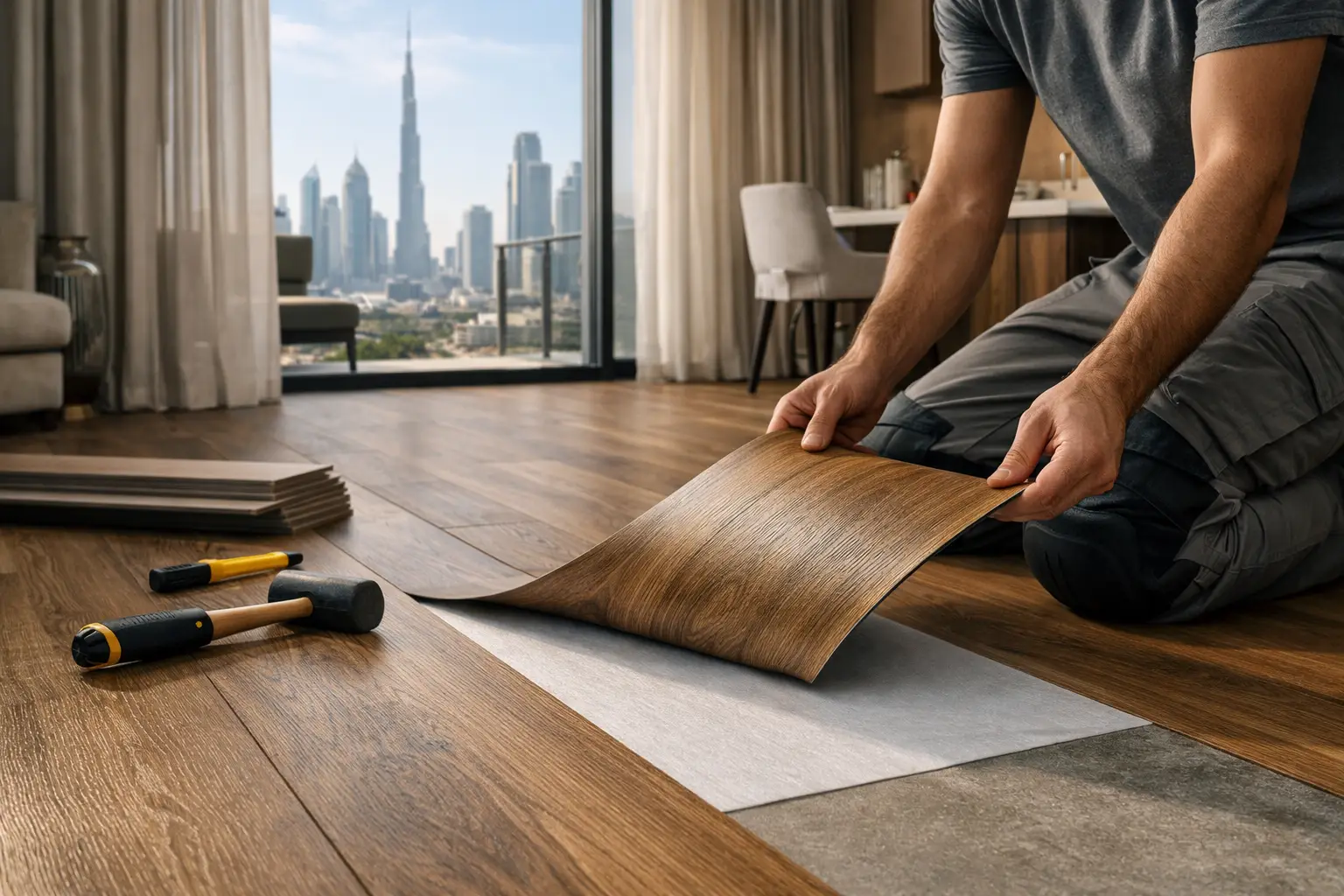
A luxury apartment can look finished on paper and still feel incomplete the moment you walk across a poorly installed floor. That is why vinyl flooring installation Dubai projects require more than selecting a good-looking plank or tile. The final result depends on subfloor preparation, moisture control, edge detailing, room transitions, and the quality of site execution.
For property owners in Dubai and Sharjah, vinyl flooring is often chosen because it offers a clean modern appearance, good underfoot comfort, and practical durability for daily living. It works well in apartments, villas, offices, and upgrade projects where clients want a refined finish without the installation complexity of some natural materials. But vinyl only performs as expected when the installation is technically correct from the beginning.
Why vinyl flooring works well in Dubai properties
Vinyl flooring suits many UAE interiors because it balances appearance with practicality. In high-rise apartments, it can help create a warmer feel than ceramic tile while keeping maintenance straightforward. In villas, it is often used in bedrooms, family areas, walk-in closets, and other spaces where clients want a softer visual texture and a more comfortable surface.
It is also a strong option for renovation projects where speed and coordination matter. Compared with some stone or wood installations, vinyl can be integrated into a broader fit-out scope with less structural impact. That matters when flooring is only one part of a larger renovation involving wardrobes, wall panels, curtains, joinery, bathrooms, or complete interior finishing.
Still, not every vinyl floor is the same. Product thickness, wear layer, core composition, installation method, and backing system all affect the result. A premium interior deserves proper material selection, not just a quick finish chosen from samples alone.
What affects vinyl flooring installation in Dubai
The biggest mistake in flooring projects is assuming the visible surface is the whole job. In reality, the unseen preparation often decides whether the floor will remain stable and attractive over time.
Subfloor condition matters first
Before any vinyl planks or tiles are laid, the existing floor needs to be checked for level differences, cracks, moisture issues, old adhesive residue, and weak patches. Even small imperfections can telegraph through vinyl, especially in thinner materials. What looks minor at handover can become much more obvious once daylight hits the floor across a large room.
A proper contractor will assess whether leveling compound, surface grinding, patch repair, or additional preparation is required. Skipping this step may reduce time at the start, but it usually creates more visible problems later.
Material type changes the installation method
Glue-down vinyl, click-lock vinyl, and loose-lay systems each have different site requirements. Glue-down applications can deliver a very stable and refined finish, particularly in large open areas, but they require excellent subfloor preparation and careful adhesive work. Click systems can be efficient and clean, but they still need flatness control, perimeter detailing, and proper transition planning.
The right choice depends on the property, room use, and expected traffic. For premium residential interiors, the decision should be made based on performance and finish quality, not just convenience.
Moisture and room conditions cannot be ignored
Dubai properties often have varying internal conditions depending on AC use, occupancy, and building age. Ground-floor villas, utility areas, and some older units may present more moisture-related risks than clients expect. If those conditions are not tested and addressed, vinyl can shift, lift, or fail prematurely.
A professional flooring contractor will review site conditions before installation rather than treating every apartment or villa as identical. That level of caution protects both the material and the overall renovation investment.
Vinyl flooring installation Dubai homeowners should expect
A professional vinyl flooring installation Dubai service should feel organized from the survey stage onward. That means clear measurement, material review, subfloor evaluation, and coordination with any other works happening on site.
In many homes, flooring does not happen in isolation. Skirting profiles, door clearances, built-in wardrobes, kitchen kickplates, wall finishes, and furniture layouts all influence the flooring package. If these trades are handled separately without coordination, the floor may end up with awkward cuts, poor transitions, or compromised edges.
This is where an experienced interior execution company adds value. When flooring is coordinated alongside joinery, wall finishing, upholstery, curtains, and renovation works, the result is more controlled. It also gives the client one accountable team rather than multiple vendors passing responsibility between each other.
Where good installation shows most clearly
Clients usually notice quality in the details, not just the material itself. A good vinyl floor should sit flat, align consistently, finish neatly around frames and corners, and transition cleanly between spaces.
Edges, trims, and skirting lines
Poor perimeter finishing can make even premium flooring look rushed. The cuts around walls, columns, and door frames need precision. The skirting choice also matters. In some interiors, existing skirting can be retained and adjusted. In others, replacing it is the better decision for a sharper finish.
This depends on the age of the property, the wall condition, and the overall design standard the client wants to achieve.
Floor transitions between rooms
One of the most overlooked parts of flooring work is the transition from one area to another. Apartment renovations may require careful transitions from vinyl to tile in kitchens or bathrooms. Villas may need cleaner movement between bedrooms, dressing spaces, and corridors.
A rushed installation often reveals itself here. Good execution keeps these changes deliberate and visually balanced.
Pattern and layout planning
Plank direction affects how large a space feels and how natural the floor looks in relation to windows, hallways, and furniture. The layout should be planned before installation starts, not improvised room by room. In high-end interiors, this planning is part of the finish quality.
Common problems caused by poor execution
Most flooring complaints do not start with the product. They start with installation shortcuts. Gaps, lifting corners, hollow areas, visible subfloor irregularities, weak adhesive bonding, and inconsistent alignment are usually site execution issues.
Another common problem is poor sequencing with other renovation works. If flooring is installed too early, later trades can damage it. If it is installed too late without proper planning, door frames, wardrobes, and fixed elements may limit the finish quality. Timing matters as much as workmanship.
That is why experienced fit-out teams treat flooring as part of the full execution plan rather than a standalone purchase.
Choosing the right partner for vinyl flooring installation Dubai
When evaluating contractors, property owners should look beyond sample books. The real question is whether the team can inspect the site properly, prepare the subfloor correctly, coordinate with surrounding finishes, and deliver a floor that looks consistent across the entire property.
For villas and premium apartments, the best outcome usually comes from working with a contractor that understands complete interior execution. Flooring interacts with custom wardrobes, media walls, upholstered elements, curtains, bathroom upgrades, and other finishing works. A company with in-house capability and renovation experience can manage these interfaces more effectively.
This is especially relevant in lived-in homes, upgrade projects, and investment properties where time, cleanliness, and accountability are important. Clients are not just buying flooring material. They are buying a finished result.
When vinyl is the right choice - and when it depends
Vinyl flooring is a strong solution for many residential and light commercial interiors, but the right specification depends on use. For bedrooms, family living, and rental upgrades, it can provide an attractive and practical finish. For high-moisture areas or heavily exposed exterior-adjacent zones, the specification needs closer review.
It also depends on the design direction. Some clients want a wood-look plank to soften a modern apartment. Others prefer a more uniform stone-look visual for a contemporary fit-out. The finish should support the interior scheme rather than compete with it.
An experienced contractor will usually advise on suitability based on the actual site, expected use, and surrounding materials instead of pushing a one-size-fits-all option.
For clients planning a broader renovation, vinyl flooring often works best when it is specified as part of the full interior package. That allows the flooring, wall finishes, custom furniture, curtains, and joinery details to be resolved together. Companies such as Time Furniture are often chosen for this kind of integrated execution because the process is more controlled and the final result feels more complete.
A well-installed vinyl floor should never draw attention for the wrong reasons. It should feel quiet, precise, and fully resolved the moment you step into the space.