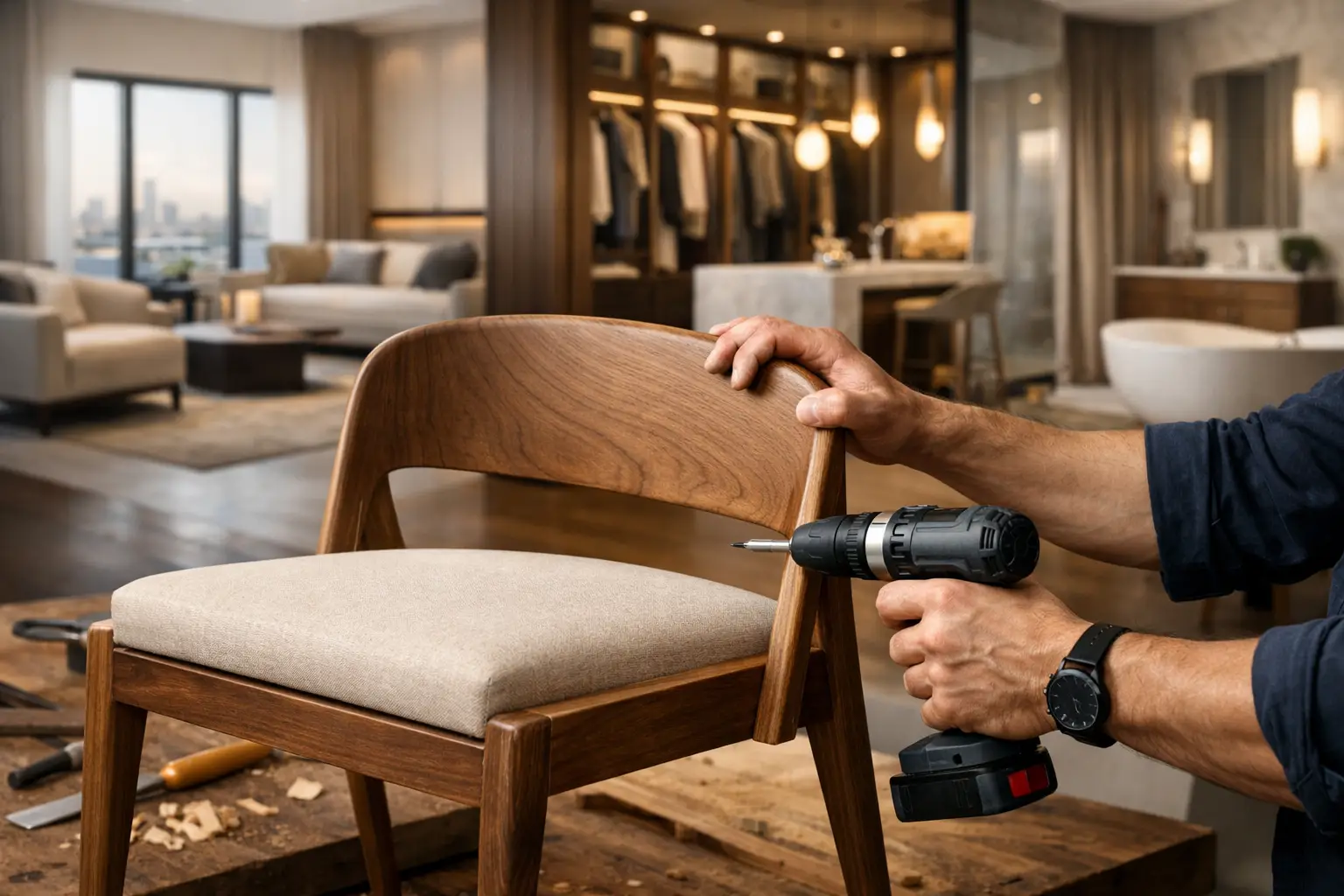
A well-finished custom sofa, dining table, wardrobe, or bed does not start in a showroom. It starts with the right execution partner. If you are asking where to get custom furniture made, the real question is who can deliver the design, materials, measurements, finish quality, and site coordination without creating delays or costly rework.
For homeowners and property investors, this decision matters more than it first appears. Custom furniture is not only about style. It affects room proportions, circulation, storage, durability, and how well the finished interior works as a whole. In villas and apartments with premium expectations, poorly coordinated custom furniture often leads to visible gaps, awkward dimensions, mismatched finishes, and installation issues that could have been avoided from the start.
Where to get custom furniture made depends on the project
There is no single answer that fits every property. The best place to get custom furniture made depends on whether you need one standalone piece, a full home furnishing package, or custom-built items tied to a renovation or fit-out scope.
If you are commissioning a single item, such as a custom bed or dining table, a specialized workshop may be sufficient. But if your project includes wardrobes, wall paneling, upholstered seating, curtains, flooring, kitchen work, or renovation works at the same time, using separate suppliers can quickly complicate the process. Dimensions shift on site, finishes need to be matched, and installation sequencing becomes critical.
That is why many premium property owners prefer an interior execution company with in-house joinery and upholstery capability. In that setup, the furniture is not treated as an isolated purchase. It is designed, produced, and installed as part of the wider interior scope. That usually leads to better fit, cleaner coordination, and clearer accountability.
What makes a good custom furniture maker
The right company should be able to do more than produce attractive drawings. Custom furniture has to perform in real spaces under real use. A strong maker understands construction details, load considerations, fabric behavior, edge finishing, hardware quality, stain consistency, and site conditions.
Joinery capability is a major factor. If cabinetry, wardrobes, TV units, consoles, beds, and wall features are all part of the same vision, an experienced joinery team brings control over measurements and finishing details. Upholstery capability also matters, especially for sofas, headboards, banquettes, accent chairs, and cushions where comfort and tailoring are just as important as appearance.
Beyond production, project handling is equally important. A reliable company should be able to manage site visits, take accurate measurements after civil or finishing works, coordinate with renovation teams, and install pieces without damaging completed surfaces. For high-value interiors, this level of execution discipline is not optional.
What to check before choosing where to get custom furniture made
First, look at whether the company actually manufactures or only outsources. Outsourcing is not always a problem, but it can weaken control over timing, finish quality, and revisions. In-house production generally offers stronger oversight and faster problem-solving when adjustments are needed.
Second, check whether the company works across materials. Many custom furniture projects involve a mix of wood veneer, laminate, paint finishes, solid surfaces, glass, metal details, upholstery, and soft furnishings. If multiple trades are needed, a company that manages them internally or under one execution structure will usually reduce coordination risk.
Third, assess technical understanding. A custom wardrobe is not just shelving behind doors. It involves carcass construction, hinge quality, internal layouts, lighting preparation, edge detailing, and how it interfaces with floors, ceilings, and wall finishes. The same applies to custom sofas, beds, and wall units. Design intent is important, but technical execution determines whether the result feels premium.
Fourth, ask how the company handles measurement and installation. Furniture made from early drawings alone often requires adjustments once the site is ready. Professional teams know when to take final dimensions and how to plan around tile build-up, skirting profiles, ceiling bulkheads, curtain recesses, and other site realities.
Custom furniture versus full interior execution
This is where many clients make the wrong comparison. They compare a furniture workshop with a retailer, when the more relevant comparison may be between a workshop and a full-service interior contractor.
If your property is already complete and you only need a few pieces, a furniture-focused manufacturer may be the right route. But if the furniture is tied to renovation, fit-out, or interior upgrading, the better option is often a company that can handle the full execution package under one roof.
That difference becomes clear in projects involving kitchens, walk-in closets, custom wardrobes, wall cladding, bathrooms, flooring, curtains, and made-to-measure upholstered furniture. In these cases, furniture dimensions depend on built conditions. Colors and textures must sit well together. Installation timing affects every finishing stage around it. One accountable execution partner can manage those dependencies far more effectively than several disconnected suppliers.
Why premium homeowners usually avoid fragmented sourcing
Fragmented sourcing can look manageable on paper. One vendor for furniture, another for curtains, another for wardrobes, another for flooring. In practice, the client often becomes the coordinator between all of them.
That creates predictable issues. One supplier blames another for measurement discrepancies. Finish samples are approved in isolation and do not work together once installed. Delivery dates shift, which delays access for the next trade. Minor site changes turn into major communication gaps.
For premium villas and apartments, especially in communities where finishing standards are closely scrutinized, a more integrated model is usually safer. When one company oversees joinery, upholstery, curtains, flooring, wall finishes, and related renovation works, the process is more controlled. It also gives the client a clearer line of responsibility if any correction is required.
Where to get custom furniture made for villas and apartments
For villa owners, custom furniture often goes beyond loose pieces. It can include oversized sectionals, custom beds, walk-in closets, dressing units, media walls, dining setups, entrance consoles, and tailored outdoor-adjacent seating zones. These require careful proportioning to large spaces and consistent detailing across rooms.
For apartment owners, the challenge is often different. Space efficiency matters more, and custom furniture must work harder. Storage beds, compact dining solutions, built-in wardrobes, window seating, wall-mounted units, and integrated curtains can significantly improve function without compromising finish quality.
In both cases, the best answer to where to get custom furniture made is usually a company that understands both manufacturing and interior execution. The furniture should not feel added later. It should feel built for the property from the beginning.
A practical standard for choosing the right partner
A good custom furniture company should be able to discuss more than style references. They should speak confidently about timber finishes, foam density, fabric suitability, hardware selection, edge profiles, structural support, maintenance expectations, and installation planning. That technical depth is often what separates a premium result from a merely attractive one.
It is also worth considering whether the company has experience with complete residential and commercial execution. Teams that regularly handle turnkey fit-out and renovation works tend to be stronger at coordination, scheduling, and final detailing. They understand how furniture interacts with lighting, flooring, wall finishes, and architectural constraints.
For clients in Dubai and Sharjah, this matters because many properties involve custom interior requirements rather than standard room layouts. Ceiling details, MEP conditions, developer handover tolerances, and design upgrades all affect how custom pieces should be built and installed.
An established execution company such as Time Furniture brings an advantage here by combining renovation works, joinery, upholstery, curtains, flooring, and custom furniture through in-house teams. That structure supports better quality control and a more organized project experience, particularly when the furniture is only one part of a larger interior scope.
The better question to ask
Instead of only asking where to get custom furniture made, ask who will take responsibility for the final result. That includes the shop drawings, material recommendations, production quality, coordination with site conditions, delivery planning, and installation finish.
The right partner should make the process easier, not heavier. They should reduce decision fatigue, protect quality, and deliver pieces that fit the space properly and support the overall interior rather than compete with it.
When custom furniture is handled by an experienced execution team, the result is usually more refined, more functional, and far less stressful to complete. That is often what clients are really looking for when they start the search.